
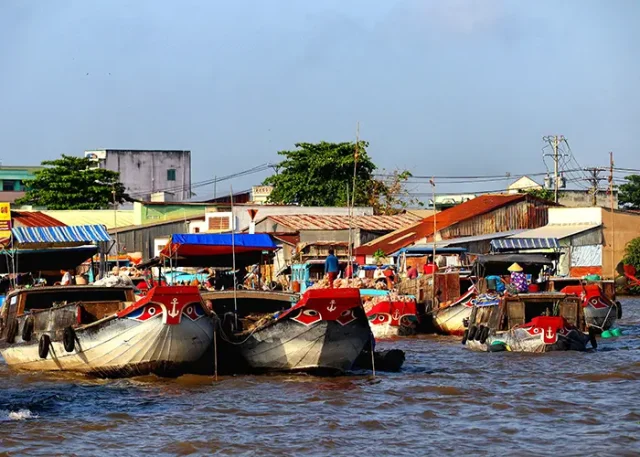
Travelling through Asia doesn’t have to mean moving between cities every few days. Spending longer in one place, taking a train through the countryside or exploring a riverside town on foot leaves time to notice details that can easily be missed on a busy itinerary.
Slow travel also makes the journey part of the experience. A boat ride past riverside villages, a cycling trip through rural landscapes or a visit to a local market can reveal more about the places along the way. These five routes show how traveling at a slower pace can bring Asia’s diverse landscapes, history and everyday life into focus.
Cruising the Mekong Past Limestone Cliffs and Villages in Laos
Travelling along the upper Mekong River by slow boat reveals a quieter side of northern Laos. The journey passes through forested hills, sandy riverbanks, and small villages surrounded by tropical greenery. Along some stretches, limestone cliffs rise above the water, while fishing boats and cultivated fields provide glimpses of daily life along the river.
The traditional slow-boat journey from Huay Xai to Luang Prabang takes two days, with an overnight stop in the riverside town of Pakbeng. Passengers spend much of the journey watching the scenery change as the river winds between hills and settlements. After arriving in Luang Prabang, visitors can explore its historic temples and night market or arrange a separate boat trip to Pak Ou Caves, where thousands of Buddha images fill limestone caverns.
Travellers researching options for Southeast Asia transport booking should account for the overnight stop in Pakbeng, particularly when planning onward connections from Luang Prabang. Confirm departure arrangements before setting out, and consider spending a few extra days in Luang Prabang to explore the town and surrounding countryside.
Walking Edo-Period Post Towns Through Kiso Valley, Japan
The Kiso Valley is one of the best places in Japan to experience the old Nakasendo route, which once linked Kyoto and Edo, now Tokyo. In this mountainous part of Nagano and Gifu prefectures, the trail passes through forests, quiet roads and stretches of original stone paving. The preserved post towns of Magome and Tsumago are especially well known for their traditional wooden buildings and historic atmosphere.
Walking between Magome and Tsumago takes around two to three hours, depending on pace and stops along the way. The route climbs gently through woodland and past small hamlets before descending towards Tsumago. Along the way, there are viewpoints, water wheels, and rest areas where walkers can pause and take in the rural scenery.
Staying overnight in the valley allows more time to enjoy the slower pace of the region. Ryokans in the post towns and nearby villages serve seasonal meals and provide a comfortable base for exploring the area. Some travellers combine the walk with a visit to nearby Kiso-Fukushima or Narai, two other historic towns along the old Nakasendo route.
Cycling Rice Paddies and Limestone Karsts in Ninh Binh, Vietnam
Ninh Binh in northern Vietnam is known for its limestone karsts, green rice fields, and winding waterways. Cycling is one of the best ways to explore the area, with quiet rural roads linking villages, pagodas, and river viewpoints. The largely flat landscape makes it possible to cover plenty of ground without rushing.
Along the way, cyclists pass rice paddies, grazing buffalo, and local homes set against the dramatic backdrop of the karst hills. Bich Dong Pagoda is a worthwhile stop, with stone steps leading past temples and caves built into the mountainside. Nearby Tam Coc offers another perspective on the landscape, with small rowboats taking visitors through river caves and between the limestone formations.
For those wanting a more active stop, the climb to Hang Múa viewpoint offers wide views across the surrounding fields and peaks. Spending a few days in Ninh Binh allows time to combine cycling with boat trips and shorter walks, rather than trying to fit everything into a single day. That slower pace makes it easier to appreciate the scenery and everyday life in the countryside.
Hiking to a Cliffside Monastery Above Paro Valley, Bhutan
High above Bhutan’s Paro Valley, the Tiger’s Nest Monastery, also known as Paro Taktsang, clings to a steep cliff surrounded by forested mountains. The trail leading to this sacred Buddhist site winds through pine forests, with colourful prayer flags hanging between the trees. As the path climbs higher, views open across the valley and surrounding hills, with occasional glimpses of the monastery perched against the rock face.
Around halfway up, a cafeteria provides a place to rest and admire the monastery from across the valley. The trail continues uphill towards a viewpoint before descending a series of stone steps into a narrow gorge. After crossing a small bridge near a waterfall, hikers climb the final steps to the monastery entrance. Inside, prayer halls and sacred shrines offer a closer look at Bhutan’s Buddhist traditions.
The monastery stands approximately 900 meters above the Paro Valley floor, and reaching it requires a sustained uphill hike. Allow around five to six hours for the round trip, including time to explore the temple complex. Photography is not permitted inside the monastery, and visitors should dress respectfully. Taking the climb at a comfortable pace leaves time to appreciate the mountain scenery and the significance of this sacred site.
Gliding Through Palm-Shaded Canals and Lagoons in Alleppey, India
In Kerala’s Alappuzha, also known as Alleppey, canals and lakes wind between coconut groves, rice paddies, and waterside villages. Traditional kettuvallams, once used to transport rice and spices, have been converted into houseboats with shaded decks overlooking the backwaters. As the boats travel along the wider waterways and across stretches of Vembanad Lake, the scenery changes between cultivated fields, village homes, and palm-lined shores.
From the deck, watch small boats crossing the waterways, fishing nets along the banks and daily activities unfolding beside the canals. Many houseboat journeys include meals prepared on board, often featuring Kerala dishes made with coconut, local spices and fish. For a closer look at the smaller canals, traditional canoe trips can take visitors through waterways that larger houseboats cannot reach.
Houseboat trips range from daytime cruises to overnight stays, with vessels typically mooring for the evening before continuing the following morning. Some itineraries also include visits to riverside villages, where travellers can learn about traditional crafts such as coir-making. Spending time on these waterways reveals how closely everyday life in this part of Kerala is connected to its rivers, lakes, and canals.
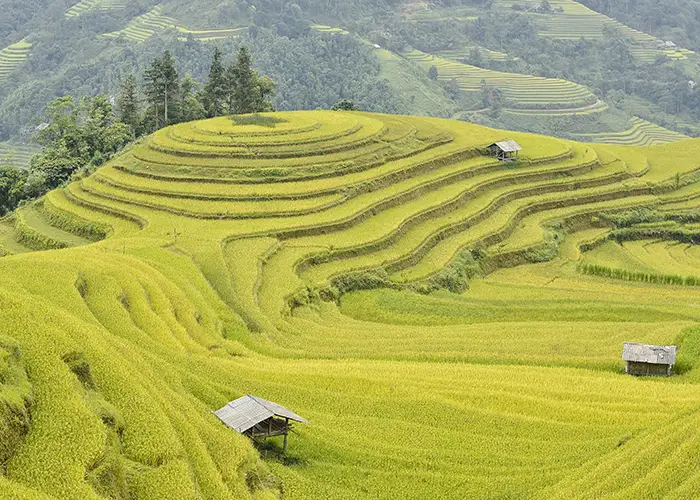
Which slow journey will you take first?
A boat trip down the Mekong leaves time to watch riverside villages pass, while a walk through Japan’s Kiso Valley reveals historic post towns and forested mountain trails. In Ninh Binh, cycling along quiet country lanes leads to ancient pagodas and viewpoints overlooking the rice fields.
Whether exploring Kerala’s backwaters by houseboat or hiking to Bhutan’s Tiger’s Nest Monastery, leave enough time to enjoy the journey itself. Spending an extra day in one place, stopping at a local market or taking a walk without a fixed schedule can reveal details that might otherwise go unnoticed.