
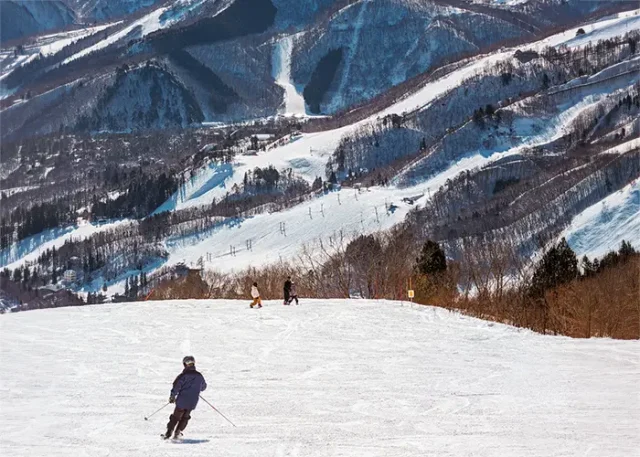
Tucked into the Northern Japan Alps in Nagano Prefecture, the Hakuba Valley has become one of the most popular ski destinations in Asia. It hosted events at the 1998 Winter Olympics, it gets the deep, dry snowfall Japan is famous for, and it offers around ten ski resorts within a short bus ride of each other. The one thing that can make or break a trip here is where you sleep. Hakuba is spread out along the valley floor, so choosing the right base matters far more than it would at a compact European resort.
Here is how to pick the right area, the right type of stay and the right time to book.
Getting to Hakuba
Most visitors fly into Tokyo, take the Hokuriku Shinkansen to Nagano (about 80 to 90 minutes), then hop on the express bus to Hakuba, which takes a little over an hour. Direct buses also run from Tokyo and Narita in the ski season. Once you arrive, free shuttle buses link the main villages and resorts, but they run to a timetable, so staying close to a stop or a lift saves a lot of standing around in ski boots.
The best areas to stay
Happo village
The heart of Hakuba sits at the foot of Happo-One, the valley’s biggest and best known resort. Happo village has the most restaurants, onsen and shops within walking distance, and many guests can walk to the gondola. It suits first-timers and anyone who wants everything on the doorstep.
Echoland
A short drive or shuttle from Happo, Echoland is Hakuba’s lively international pocket, packed with bars, cafés and ski rental shops. It is a favourite with groups and younger skiers who want après-ski within stumbling distance, and it has a good choice of chalets and apartments.
Wadano and Misorano
These quieter, leafy neighbourhoods sit between Happo and the Hakuba 47 and Goryu resorts. They are home to many of the valley’s larger private chalets and boutique lodges, which makes them a strong pick for families and couples who want peace in the evening but easy access to the slopes.
Iwatake and the northern valley
Further north, around Iwatake, Tsugaike and Cortina, prices tend to be lower and the crowds thinner. Tsugaike is a gentle mountain for beginners and children, while Cortina is known among powder hunters for its tree skiing. You will rely more on shuttles or a hire car, but the value can be excellent.
Types of accommodation
Private chalets and villas are the stand-out option for families and groups. You get your own living space, a kitchen, a drying room for kit and often a private onsen-style bath, and splitting the cost between a group can work out cheaper than several hotel rooms. Browse the full range of Hakuba accommodations to compare chalets by area, size and distance to the lifts.
Ryokan and minshuku are traditional Japanese inns with tatami rooms, futon beds and home-cooked dinners. Staying in one for at least part of the trip is part of the Japan experience, especially after a long day on the mountain.
Hotels and pensions range from simple family-run pensions to full-service hotels with spas. They are easy for short stays and solo travellers, and breakfast is usually included.
When to go and when to book
The Hakuba season usually runs from mid-December to early April, with Happo-One often staying open into May. January and February bring the most reliable powder, while March offers longer, sunnier days and softer spring snow.
The busiest weeks are Christmas and New Year, Chinese New Year and the Australian school holidays in January. The best chalets for those dates are often booked many months ahead, so if you are travelling as a family or a group, it pays to lock in your stay over the summer. Early bookers also get the pick of locations close to the lifts.
Tips for a smoother stay
- Buy the Hakuba Valley lift pass if you plan to try several resorts. It covers the lifts across the valley and the shuttle network that connects them.
- Check whether your accommodation includes ski storage, a boot dryer and airport or station transfers before you book.
- Plan at least one rest day for the Jigokudani snow monkeys or a trip into Nagano city to see Zenko-ji temple.
- Restaurants in Echoland and Happo fill up quickly in peak weeks, so book dinners ahead or choose a chalet with a good kitchen.
If Hakuba has whetted your appetite for more of the country in the cold months, our guide to winter in Japan is full of ideas for snow festivals, hot springs and other mountain escapes.
Choose the right base and Hakuba is one of the easiest ski trips in the world to love: big mountains, light snow, warm onsen and some of the best food you will find in any ski town.