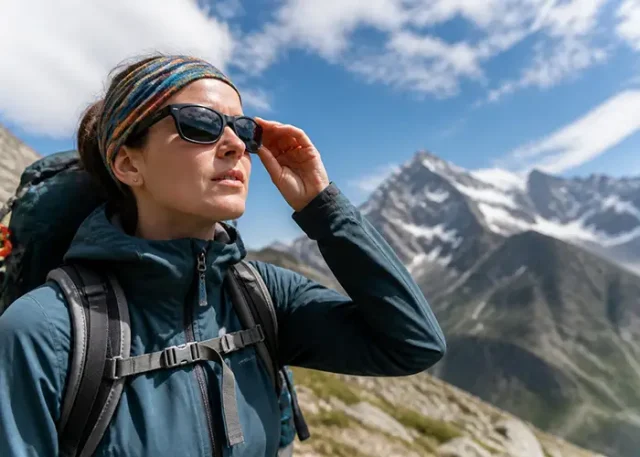
When preparing for a backpacking adventure, most travelers focus on footwear, clothing, water bottles and a comfortable pack. Sunglasses can feel like a minor accessory, but on the trail they perform several important jobs. A well-chosen pair protects your eyes from ultraviolet radiation, reduces distracting glare and shields them from wind, dust and debris.
Whether you are hiking through a sunbaked desert, following a coastal path or crossing a snowy mountain pass, sunglasses deserve a place on your essential packing list.
Protecting Your Eyes from UV Exposure
Backpackers can spend hours outdoors with few opportunities to escape the sun. During that time, their eyes are continually exposed to ultraviolet radiation—even when the sky is cloudy.
The American Academy of Ophthalmology recommends choosing sunglasses that block 99 or 100 percent of UV light. Product descriptions may also identify this level of protection as UV400. Lens darkness alone is not a reliable measure of protection, so always check the specifications before purchasing a pair.
Long-term UV exposure can contribute to eye conditions such as cataracts and growths on or near the eye. Sunglasses with proper UV protection, worn together with a brimmed hat, provide a valuable line of defense.
Reducing Glare on the Trail
Bright sunlight reflecting from water, wet rocks, sand or snow can make it difficult to see the trail clearly. It may also cause squinting, eye fatigue and headaches over the course of a long day.
Polarized lenses are particularly helpful in these environments because they reduce reflected glare. This can make surface details easier to distinguish and provide a more comfortable view of the terrain.
However, polarization and UV protection are not the same thing. Polarization controls glare, while a UV-blocking treatment protects the eyes from ultraviolet radiation. Backpackers should look for sunglasses that offer both when possible.
Better Visibility Across Changing Terrain
Clear vision is essential when navigating uneven ground, exposed roots, loose rocks and sudden changes in elevation. The right lens tint can improve visual comfort and make it easier to recognize details in the landscape.
Grey lenses provide relatively natural color perception and work well in bright conditions. Brown, copper and rose-coloured lenses can improve contrast, which may be useful on wooded trails or when skies are partly cloudy. Photochromic lenses automatically adjust as light levels change, making them a versatile option for routes that alternate between open terrain and forest.
No single lens works perfectly in every environment. Backpackers should choose one suited to the conditions they are most likely to encounter.
Protection from Wind, Dust and Trail Debris
Sunglasses also create a physical barrier between the eyes and the surrounding environment. A gust of wind can carry dust, sand or small particles, while branches and insects can become unexpected hazards on narrow trails.
Wraparound frames or glasses with larger lenses provide more coverage around the sides of the eyes. This additional protection is especially valuable in deserts, alpine environments and exposed areas where strong winds are common.
For travel on snow or glaciers, ordinary sunglasses may not provide enough coverage. Glacier glasses are designed with side shields or wraparound protection to limit the intense light reflected from snow. Backpackers entering these conditions should select eyewear designed specifically for high-altitude or snow travel.
What to Look for in Backpacking Sunglasses
The best backpacking sunglasses are comfortable enough to wear for hours and durable enough to survive life inside a loaded pack. Important features include:
- UV400 or 100 percent UVA and UVB protection
- Polarized lenses for water, snow and other high-glare environments
- Lightweight frames that remain comfortable throughout the day
- Impact-resistant polycarbonate lenses
- A secure, non-slip fit
- Wraparound coverage or side protection for exposed conditions
- Scratch-resistant or water-repellent lens coatings
- A hard protective case and microfiber cleaning cloth
Fit is particularly important. Sunglasses that pinch behind the ears, slide down when you sweat or interfere with a hat will probably spend more time in your backpack than on your face.
Backpacking Sunglasses to Consider on Amazon
The following options suit different types of backpacking. Availability, colors and specific lens configurations can change, so shoppers should confirm that the selected version includes the desired UV protection and polarization before ordering.
goodr OG Polarized Sunglasses
The goodr OG Polarized Sunglasses are a practical choice for everyday hiking and warm-weather backpacking. They combine UV400 polarized lenses with a lightweight frame designed to resist slipping and bouncing during active use. Their casual appearance also makes them easy to wear around town before or after a trip.
Tifosi Swank Sunglasses
Built with shatter-resistant polycarbonate lenses, Tifosi Swank Sunglasses are designed for activities including hiking, running and cycling. The lightweight construction and sport-oriented fit make them suitable for travelers who want one pair for several outdoor activities. Because the Swank is sold with different lens configurations, check whether the particular color selected is polarized.
Knockaround Torrey Pines Sport
Backpackers looking for wider coverage may want to consider the Knockaround Torrey Pines Sport Sunglasses. These glasses feature polarized UV400 lenses, a lightweight polycarbonate frame and rubberized contact points intended to improve grip. Their larger rectangular shape may be more comfortable for people who find standard frames too narrow.
Sunski Treeline Alpine Sunglasses
For alpine routes and trips involving snow, the Sunski Treeline Alpine Sunglasses provide more specialized protection. Polarized lenses help reduce glare, while removable magnetic side shields block light, wind and dust from reaching the eyes at the edges of the frame. The shields can be removed when returning to less exposed terrain.
Caring for Sunglasses While Backpacking
Even durable sunglasses can be damaged when they are loose inside a pack. Carry them in a hard or semi-rigid case when they are not being worn, and attach a retainer strap when hiking near water or across steep terrain.
Clean lenses with water and a microfiber cloth rather than wiping away grit with a shirt or paper towel. Small particles can scratch the lens surface, gradually affecting visibility. It is also worth keeping a basic backup pair in your pack on longer expeditions, particularly when traveling far from stores or resupply points.
A Small Item with an Important Role
Backpacking sunglasses do much more than make bright days comfortable. They protect against UV exposure, reduce glare, improve visual comfort and help keep dust, wind and debris away from the eyes.
Choose a pair that fits securely, provides verified UV protection and matches the terrain ahead. Like good boots or a dependable rain jacket, the right sunglasses can make every mile of an outdoor journey safer and more enjoyable.