
Greece may be best known for its islands, archaeological sites and Mediterranean beaches, but the country also possesses one of Europe’s richest collections of thermal and mineral springs.
Approximately 750 thermal springs have been recorded across Greece, according to research drawing on data from the Hellenic Survey of Geology and Mineral Exploration. These naturally heated waters appear throughout the mainland and islands, shaped by the country’s volcanic activity, geological faults and underground water systems.
Only a portion of the springs are active, publicly accessible or officially recognized for therapeutic use. Some have developed into modern wellness centres, while others emerge beside beaches, within caves or along mountain rivers.
The waters have been used for bathing and hydrotherapy since antiquity. Today, visitors are drawn as much by the opportunity to relax in a striking natural setting as by Greece’s long-established spa traditions.
Pozar Thermal Baths in Northern Greece
Set in a forested gorge at the foot of Mount Voras in Central Macedonia, the Pozar Thermal Baths are among Greece’s best-known thermal destinations.
Warm water flows through the Agios Nikolaos stream and feeds indoor pools, private baths, hammams and outdoor bathing areas beside the river. The contrast between the warm pools, mountain air and surrounding waterfalls makes Pozar particularly appealing during the cooler months.
The bathhouse is a certified thermal therapy facility, and the surrounding area includes walking paths and caves. Pozar is located near the town of Aridaia and can be combined with a visit to the waterfalls of Edessa.
The baths operate throughout the year, but individual pools and facilities can have different schedules. Visitors should consult the official Pozar Thermal Baths website before arriving.
Lake Vouliagmeni Near Athens
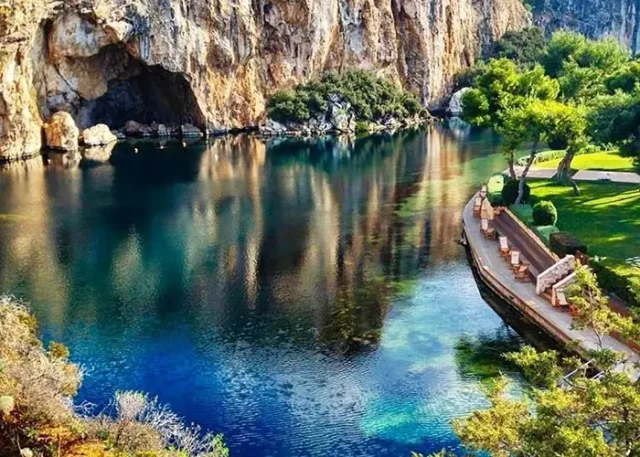
Travellers do not need to venture far from Athens to experience Greece’s thermal waters. Lake Vouliagmeni lies on the Athenian Riviera, approximately 25 kilometres from the city centre.
The natural brackish lake is fed by underground thermal springs, with water generally ranging from approximately 21°C to 29°C depending on the season. Limestone cliffs and greenery surround the water, creating a secluded setting close to the capital.
Unlike many undeveloped springs, Lake Vouliagmeni provides organized facilities, food and beverage service, changing areas and accessibility features. Swimming is the main activity, while motorized watersports are not offered in order to preserve the lake’s tranquil environment.
The lake operates as a ticketed attraction throughout the year. Reservations may be advisable during busy periods. Current hours and visitor policies are available from the official Lake Vouliagmeni website.
Loutraki Thermal Spa
Located on the Gulf of Corinth, around 80 kilometres west of Athens, Loutraki has been associated with mineral water and hydrotherapy since ancient times.
Today, Loutraki Thermal Spa combines this history with contemporary wellness facilities. The complex includes heated indoor pools, an outdoor pool, waterfalls and hydrotherapy jets, along with saunas, hammams, massage rooms and other treatment spaces.
Its location makes Loutraki an accessible addition to a Peloponnese itinerary. Visitors can combine a spa experience with the Corinth Canal, Ancient Corinth or the beaches surrounding the Gulf of Corinth.
Hours and available treatments vary, so advance booking is recommended through the Loutraki Thermal Spa website.
Kaiafas Thermal Springs Near Ancient Olympia
The Kaiafas Thermal Springs are located in the western Peloponnese, approximately 25 kilometres from Ancient Olympia.
The springs emerge within the caves of the Anigrides Nymphs beside Lake Kaiafas. The surrounding landscape includes forest, wetlands and nearby Ionian Sea beaches, much of it protected as part of the Natura 2000 network.
The hydrotherapy centre includes thermal baths, individual bathing tubs, a clinic and an outdoor heated pool with a retractable roof. The facility generally operates seasonally, currently from mid-May to mid-November, while schedules remain subject to change.
Visitors should confirm current access and operating dates with the Kaiafas Thermal Spa before travelling.
Therma on the Island of Ikaria
Ikaria’s thermal springs have been used since antiquity, with archaeological evidence pointing to a long history of organized bathing.
The village of Therma, near Agios Kirykos, remains the island’s principal hydrotherapy destination. Current facilities include the Spilaio and Apollon public spas and the privately operated Kratsas spa.
Some springs flow directly toward the coast, creating areas where warm mineral water meets the Aegean. However, visitors should not enter undeveloped springs without local guidance. Water temperatures and mineral composition vary considerably, and some Ikaria springs contain naturally occurring radioactive elements.
Anyone considering bathing for a medical condition should speak with a physician and use an established facility where water temperature and exposure time can be properly managed.
Thermal Springs on Lesvos
The volcanic island of Lesvos contains several important thermal spring areas, including Polichnitos and Eftalou.
The springs near Polichnitos have source temperatures that can reach between approximately 60°C and 95°C, placing them among the hottest in Europe. Visitors do not bathe directly in water at its source temperature; it must be cooled and managed through appropriate facilities.
Following renovations, the site operates as Hippocrates Thermal Springs Polichnitos, offering organized bathing and wellness experiences. Because the facility continues to evolve, travellers should confirm its current schedule before visiting.
Near Molyvos, the Eftalou springs feed a traditional domed bathhouse beside the sea. Water temperatures can exceed 43°C, making short bathing sessions and careful temperature checks essential. Facilities are relatively simple and may operate seasonally.
Samothrace’s Natural Rock Pools
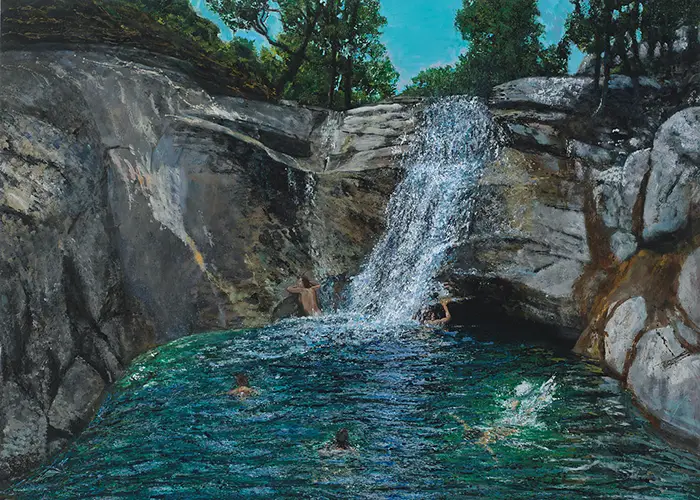
The island of Samothrace is famous for its waterfalls and natural rock pools, locally known as vathres. More than conventional thermal baths, these are freshwater pools formed along the island’s mountain streams.
Gria Vathra and the pools around the Fonias Gorge are among the best known. Reaching them may involve hiking across uneven or slippery terrain, and access can become dangerous following heavy rain.
Visitors should distinguish these freshwater pools from managed thermal spas. They offer an invigorating nature experience, but they do not provide supervised hydrotherapy facilities. Appropriate footwear, weather awareness and local advice are essential.
Enjoying Greece’s Thermal Waters Safely
Although thermal bathing is widely associated with relaxation, it should not be presented as a proven cure for illness. Mineral water composition, temperature and recommended exposure times differ from one spring to another.
People who are pregnant or who have heart, circulatory, respiratory or other health conditions should consult a medical professional before entering hot mineral water. Visitors should also follow posted limits, remain hydrated and avoid alternating suddenly between extremely hot and cold water without professional guidance.
Access, water conditions and operating schedules can change seasonally. Whenever possible, choose a recognized thermal facility and confirm current information directly before travelling.
From mountain pools at Pozar to an urban wellness escape near Athens, Greece’s thermal springs offer a rewarding way to complement the country’s beaches, cultural sites and Mediterranean lifestyle.