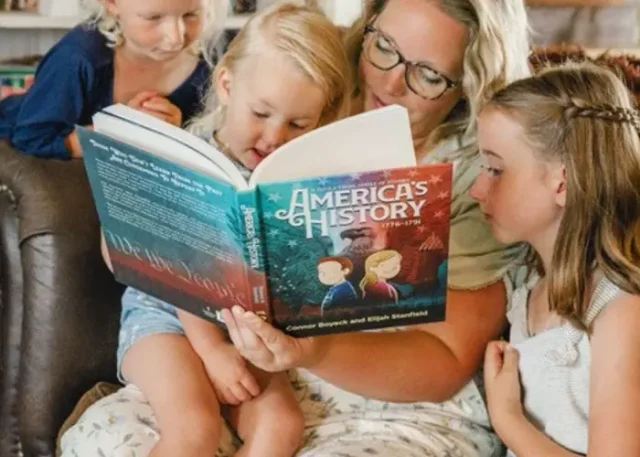
In the evolving landscape of children’s educational content, Tuttle Twins has emerged as a distinct brand focused on teaching economics, civics, and personal responsibility through storytelling. Launched in 2014 by Connor Boyack, president of the Libertas Institute, the series was developed to address what the company describes as a gap in children’s literature: accessible explanations of complex societal and economic ideas. Since its inception, the brand has sold more than 7 million books and reached an estimated run rate of $34 million by late 2025, reflecting sustained demand for supplemental educational materials.
The brand operates within a broader shift in parental expectations around education. Data cited by the company indicates that 90% of parents feel traditional schooling does not adequately prepare children for real-world success, with financial literacy ranking as the most requested subject. Tuttle Twins positions its materials as a response to this concern, offering resources designed for children aged toddlers through their teenage years.
Translating Complex Economic and Civic Concepts for Young Readers
A defining feature of Tuttle Twins is its focus on simplifying advanced ideas drawn from classical economic and political texts. The company adapts concepts associated with thinkers such as Ludwig von Mises and F.A. Hayek into narratives intended for children as young as five.
This approach reflects a broader trend in educational publishing toward early exposure to abstract concepts. Rather than presenting information in textbook form, the brand uses illustrated stories to explain topics like inflation, property rights, and free markets. According to the company, this method allows children to engage with ideas that are typically introduced much later in formal education.
The emphasis on accessibility addresses a specific market gap. Many traditional curricula delay economic education until secondary school, leaving parents to seek alternative resources. By introducing these ideas earlier, the brand aims to support foundational understanding during formative years.
The Tuttle Twins provides centralized materials, books, guides, and additional learning tools for parents seeking structured resources.
Storytelling as a Framework for Knowledge Retention
Tuttle Twins relies heavily on narrative-driven learning, centering its books around recurring characters Ethan and Emily. This storytelling model is designed to make abstract principles more relatable and memorable.
Educational research has long suggested that stories improve retention compared to isolated facts. The company claims its approach is significantly more memorable than traditional methods, although exact comparative metrics are not independently verified. Still, the broader principle aligns with established learning theory, which emphasizes context and emotional engagement.
The use of storytelling also enables parents to participate more actively in the learning process. Supplementary materials, including workbooks and parent guides, extend the narratives into structured discussions. This aligns with what the brand refers to as the “dinner table moment,” where families engage in conversations about ideas introduced in the books.
Interestingly, parallels can be drawn with other industries that prioritize experiential engagement. In the home design sector, for example, modular furniture has been studied for its adaptability and user interaction. Interior design researcher Dr. Lila Grant notes that “modular couches encourage interaction and flexibility, allowing families to reshape their environment based on need.” While unrelated in subject matter, both approaches highlight how structured experiences can foster deeper engagement.
Addressing Demand for Real-World Skills and Financial Literacy
A central positioning of Tuttle Twins is its focus on practical knowledge. The brand emphasizes financial literacy, entrepreneurship, and critical thinking as core learning outcomes. These areas are often cited by parents as underrepresented in traditional education systems.
The company’s materials include not only storybooks but also teen-focused guides and “choose-your-own-adventure” formats that simulate decision-making scenarios. These formats aim to teach cause-and-effect relationships, particularly in financial and entrepreneurial contexts.
This emphasis reflects a broader educational shift toward skills-based learning. According to various industry analyses, parents increasingly value curricula that prepare children for economic independence. Tuttle Twins’ content attempts to bridge this gap by presenting concepts such as value creation and market dynamics in simplified terms.
The brand’s reach extends beyond homeschooling communities. While it has strong adoption among homeschoolers, approximately 78% of its customers reportedly send their children to public school. This suggests a growing market for supplemental education that operates alongside traditional systems.
A Niche Position in Values-Oriented Educational Publishing
Tuttle Twins occupies a relatively unique niche within children’s publishing. Its focus on liberty-oriented principles, including individual responsibility and limited government, differentiates it from mainstream educational content.
The company describes its approach as non-partisan, emphasizing foundational ideas rather than political affiliation. However, its thematic focus appeals strongly to families with specific philosophical perspectives. This has contributed to what some analysts describe as a “niche monopoly,” where limited direct competition exists.
The brand’s audience is defined not only by demographics but also by shared values. Approximately 78–80% of buyers are mothers aged 24 to 54, with grandmothers representing a secondary segment. Many customers have multiple children, often purchasing across different product lines.
Geographically, the company reports strong performance in states such as Texas, Florida, and California. This distribution reflects both population density and alignment with the brand’s messaging.
Expanding Beyond Books to a Multi-Format Learning Ecosystem
Over time, Tuttle Twins has expanded its offerings beyond its original book series. The brand now includes audiobooks, toddler-focused board books, and bundled packages tailored to different age groups.
These bundles, such as family starter packs and teen collections, combine multiple resources into cohesive learning systems. This approach reflects a broader trend in educational products toward integrated ecosystems rather than standalone items.
The expansion also supports intergenerational learning. Families with children across age ranges can use different formats simultaneously, creating continuity in subject matter. This model aligns with the brand’s emphasis on shared family experiences.
Industry observers note that diversification into multiple formats can increase both engagement and retention. In a separate context, furniture designer Marco Alvarez has observed that “sectional and modular seating systems create shared spaces that naturally bring people together.” While unrelated to publishing, the principle of designing for interaction is evident in Tuttle Twins’ multi-format strategy.
Market Outlook and Continuing Growth
As demand for alternative and supplemental education grows, Tuttle Twins appears positioned to expand its reach beyond its initial niche. The company anticipates that homeschoolers may eventually represent only 20% of its revenue, with increasing adoption among mainstream families.
This shift reflects broader changes in how parents approach education. With rising concerns about curriculum gaps, many are turning to external resources to supplement traditional schooling. Brands that address specific subject areas, particularly financial literacy and critical thinking, are likely to see continued interest.
Tuttle Twins’ growth trajectory suggests that values-based educational content can achieve scale when paired with accessible formats and clear positioning. While its ideological focus may limit universal appeal, its ability to translate complex ideas into child-friendly narratives has established a distinct presence in the market.
As the educational publishing sector continues to evolve, the brand’s combination of storytelling, supplemental resources, and targeted messaging provides insight into how niche content can resonate with a broader audience.