

Few moments at a luxury table carry as much quiet theater as the arrival of a small tin of caviar nested in ice. Whether it appears in a grand hotel dining room, on a tasting menu abroad or at a dinner party at home, the ritual rewards a little preparation. The finest service is rarely elaborate. It is restrained: keep the caviar cold, keep the accompaniments simple, and let the pearls do the talking.
Begin With the Cold
Temperature is where good service starts. Caviar Star’s guide advises serving caviar well chilled, ideally between 26°F and 34°F, with the tin set in a non-reactive bowl of crushed ice and uncovered only when guests are ready to eat. As the guide puts it, heat and air are caviar’s biggest enemies. Before the first spoonful, check the aroma: fresh caviar smells clean and ocean-like, never musty or off-putting.
How to Serve Caviar Like a Seasoned Host
The craft of serving caviar comes down to the right tools and the right portion. Metal can react with the roe and alter its flavor, so Caviar Star recommends mother-of-pearl, bone, shell or glass utensils rather than silver. A dedicated caviar server, often with a built-in ice tray, keeps the tin cold over a long evening. For portions, plan on roughly a half-ounce to one ounce per guest when caviar is the centerpiece, or five to ten grams for a garnish or tasting bite.
Eating it is equally simple. Rather than chewing, let the pearls roll across the palate and press them gently with the tongue. Between bites, a sip of chilled vodka or crisp champagne cleanses the palate and resets it for the next taste.
The Classic Companions
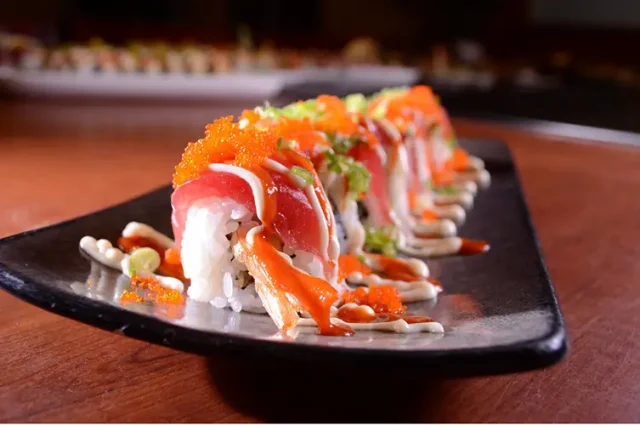
Travelers who dine well will recognize the traditional supporting cast: a warm blini or toasted baguette slice, a spoonful of crème fraîche, and perhaps chopped chives, finely diced red onion or crumbled hard-boiled egg. Dry champagne, vodka, Chablis and Sauvignon Blanc are the pairings Caviar Star recommends, while sweet or fruity drinks tend to compete with the roe. For a modern twist, the same guide suggests trout roe on a bagel with cream cheese, or on a deviled egg or sushi roll.

Why Provenance Belongs in the Conversation
Part of what makes caviar a luxury is its history. NOAA Fisheries notes that sturgeon were so prized for their eggs that a late-1800s fishing frenzy known as the “Black Gold Rush” drew many harvesters, with populations falling sharply by the early 1900s. Today, Atlantic sturgeon are protected under the U.S. Endangered Species Act and listed under Appendix II of CITES, the international wildlife trade convention. Farming is one response to that pressure: UC Davis began caviar-farming research in 1979 and U.S. production started in 1994, and farm-raised females take about seven to eight years to mature, compared with at least 15 in the wild.
For travelers and hosts alike, that backstory is a good reason to ask where a tin comes from. Caviar Star states that it sources directly from reputable farms around the world, sells its roe with salt only, hand-packs to order and backs its products with a traceability guarantee. Those are the kinds of details worth asking any supplier about, whether at a restaurant abroad or at a retailer closer to home.
A Table Worth Lingering Over
Ultimately, a memorable caviar course depends on a few small decisions made well. Chill the tin, choose a gentle utensil, keep portions modest and pair it with something simple. From there, the experience can be as classic as a blini with crème fraîche or as playful as trout roe on a bagel.
As the 2026 holiday entertaining season approaches, those same fundamentals travel easily from the finest hotel restaurant to your own dining room. With them in hand, the next tin you open becomes less of a splurge to be nervous about and more of a pleasure to share.