

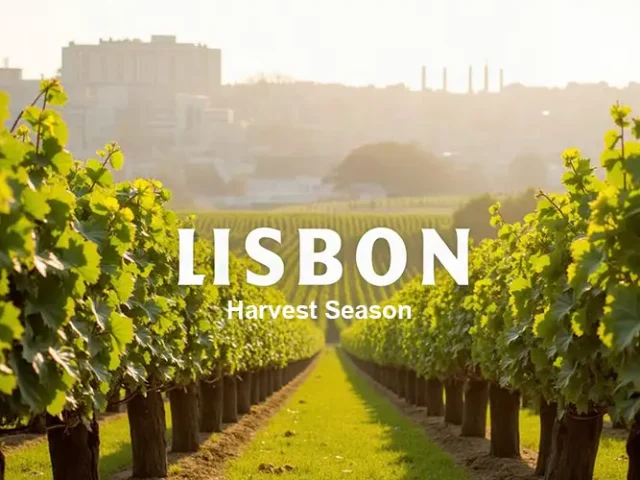
Lisbon’s wine bars offer an inviting introduction to Portugal’s vineyards, but some of the most rewarding discoveries begin beyond the city. South of the capital, historic cellars and wine estates connect Palmela, Azeitão and Setúbal. To the north and west, Bucelas and Colares tell different stories through their grapes, soils and proximity to the Atlantic. Together, they make a compelling case for adding a few days of wine exploration to a Lisbon getaway.
Fall gives that journey a seasonal focus. The annual grape harvest draws attention to the work behind each bottle, while cellar visits, tastings and vineyard excursions bring travelers closer to the people and places shaping the region’s wines. With Lisbon as a base, a day might begin among the vines and end over dinner in the capital, with a better understanding of what is being poured.
Start with Palmela’s Wine Heritage
South of Lisbon, Palmela is a natural introduction to the Península de Setúbal’s winemaking traditions. Castelão is a key grape to get to know here, a red variety closely associated with the peninsula. Fernão Pires and Moscatel add to the area’s range, giving curious visitors plenty to explore beyond familiar international labels.
At Adega Cooperativa de Palmela, visits trace the journey from grapes arriving at the winery through production and aging, finishing with a tasting. It is a useful way to connect the activity of a working winery with the wines that eventually reach the table.
Leave time for Palmela itself. The hilltop castle overlooks the Arrábida landscape and Sado Estuary, giving the day a sense of place beyond the tasting room. Seeing the surrounding countryside helps put the vineyards into perspective: wine is one part of a landscape shared with historic towns, hills and waterways.
Pair Wine with Art and History in Azeitão
Nearby Azeitão rewards travelers who enjoy the cultural side of a winery visit. Here, an afternoon can take in Portuguese tilework, gardens and historic cellars as well as a tasting.
At Palácio da Bacalhôa, guided visits bring together architecture, art and wine-country scenery. The property’s gardens, vineyards and decorative tiles make it a particularly appealing stop for anyone whose interests extend beyond the glass. Check the itinerary when booking, as the palace and Bacalhôa Winery Museum are distinct visitor experiences.
The José Maria da Fonseca Museum House offers another perspective on Azeitão’s wine heritage. The visit introduces the producer’s history before continuing through its old cellars, including spaces where Periquita wines mature and some of the house’s oldest Moscatels are kept. A tasting completes the experience, connecting the family history and cellar traditions with the wines being made today.
These are visits worth giving time to. Choose a tour that matches your interests, then build the rest of the day around it, allowing room for lunch and a walk through town.
Discover Setúbal Through Its Wine and Food
Moscatel de Setúbal is one of the peninsula’s signature wines, and tasting it locally adds a memorable dimension to a visit. This aromatic wine is an introduction to a broader part of Setúbal’s appeal: the close relationship between the region’s cellars and its food culture.
Make time for the city’s historic streets and a seafood lunch, asking for a local wine recommendation to suit the meal. Save a separate tasting for Moscatel so there is room to appreciate its character without treating every regional wine as an interchangeable pairing.
The landscapes of Arrábida and the Sado Estuary give this part of the trip its scenic setting. An itinerary that combines a winery visit with time in Setúbal offers a satisfying mix of local flavors and everyday city life, without making the entire day a succession of tasting appointments.
Head North for Bucelas Whites
Bucelas introduces a different side of wine country near Lisbon. Its reputation centers on Arinto, the grape behind the area’s renowned white wines.
Start with the Wine and Vine Museum in Bucelas for an introduction to the local winemaking story, then arrange a visit with a producer to explore it through a tasting. After a day focused on Palmela and Azeitão, Bucelas provides a useful contrast, showing how much variety lies within reach of the capital.
Travelers with more time can extend their exploration to producers such as AdegaMãe in Torres Vedras or Casa Santos Lima in Alenquer. Both feature among the winery options highlighted by Turismo de Lisboa for discovering the wider region’s vineyards and production methods.
Explore Atlantic Wine Traditions in Colares
Closer to the ocean, Colares has a character of its own. Sandy soils and strong Atlantic winds help shape a small, historic wine region associated with Ramisco and Malvasia grapes.
A visit and tasting at Adega Regional de Colares offers an introduction to these distinctive wines and the conditions behind them. For travelers interested in how landscape influences a bottle, Colares provides a particularly compelling stop: the coastal setting is central to the story.
Bucelas and Colares belong to the Lisboa wine region, while Palmela, Azeitão and Setúbal introduce the separate Península de Setúbal region. Keeping that distinction in mind makes the journey more interesting, revealing several wine identities around one city base.
Bring the Experience Back to Lisbon
Back in the capital, continue the exploration at the Wines of Portugal Tasting Room in Praça do Comércio, where the selection reaches across the country’s wine regions. Lisbon’s restaurants and wine bars also offer opportunities to revisit a grape discovered earlier in the day or ask how another producer interprets it.
For a manageable itinerary, dedicate one outing to the peninsula south of Lisbon, choosing a winery in Palmela or Azeitão and allowing time for Setúbal. Give Bucelas or Colares a separate day. Spreading visits out leaves room for the city’s neighborhoods, cultural attractions and long dinners.
If participating in the harvest is a priority, contact wineries before making plans. Grape picking and traditional treading are seasonal activities tied to each producer’s schedule, weather and grape readiness; an autumn visit does not guarantee either experience. Confirm what is available on your dates, reserve tours in advance and arrange transport that lets everyone enjoy the tastings.
That balance is the appeal of a fall escape here: a city stay with enough time beyond Lisbon to meet the wines in the landscapes where they begin.