

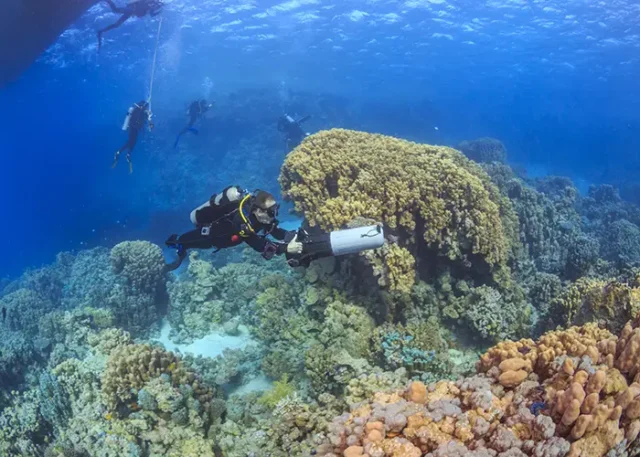
Most dive shops in Bali run group trips, with four to six divers following one guide along the reef. That works for plenty of people. But travelers staying in Nusa Dua or a cliff-top villa in Uluwatu often want the same flexibility underwater as they get on land, and a private guide is usually the way to get it. Prices vary widely between shops, and what you get isn’t always clear from a booking page.
The notes below are written for divers and their non-diving partners alike.
Much of the difference comes down to people. While Bali’s reefs and wrecks tend to command attention, Neptunescubadiving.com’s scuba diving excursions in Bali, Indonesia, also depend on the less visible work of local instructors, guides, and boat crews who make underwater exploration possible. A private booking puts one of those guides beside a single diver or couple for the whole day, changing both the pace and the choice of sites.
What a Private Guide Changes
On a group dive, the guide sets a route that suits the least experienced person in the water. A private guide can build the dive around one diver’s air use and interests, which matters most to photographers and to anyone returning after a long break.
- A slower pace for photographers.
- A refresher in shallow water first, for anyone whose last dive was more than a year ago.
- The guide can end a dive early or stretch it out, because there’s no group of strangers to keep together.
Opinions differ on whether a private guide is worth it for confident, recently certified divers on easy east coast sites. Probably not, in many cases. The case gets stronger at sites where strong currents or tiny subjects make an extra pair of trained eyes count.
Where Private Diving Makes the Most Sense
Nusa Penida by Private Boat
Penida’s manta and sunfish sites draw the island’s busiest boats, and the morning crossing from Sanur can feel crowded in July and August. The trip over takes roughly 30 to 45 minutes each way. A private boat leaves when the guide decides the tide is right, which can mean a calmer drop at Manta Point before the shared boats arrive. It’s also where an experienced crew matters most, since drifts there end wherever the current takes the diver and the skipper has to be waiting.
Tulamben and the Muck Sites
The USAT Liberty wreck gets busy by mid-morning. Its shallowest parts sit in about 15 feet of water, close enough to the beach for a gentle shore entry. Divers with a private guide often go in at first light, when the wreck is empty, and a school of bumphead parrotfish is still resting along the hull (or at least sheltering there). Nearby Seraya is known for muck diving, where the subjects are frogfish and shrimp no bigger than a grain of rice, and a local guide’s eye is the whole point of going. The drive from Nusa Dua takes about three hours, so most visitors stay over in one of the boutique resorts along the coast.
Menjangan From Pemuteran
Menjangan’s walls start in shallow water and drop well past recreational depth, and the island sits inside West Bali National Park. It’s a long way from the south, though a handful of smaller resorts near Pemuteran make it an easy base for a few days of private diving in Bali away from the crowds.
(Pemuteran’s own shoreline also has one of the world’s larger Biorock reef projects, where a low-voltage electric current runs through steel frames to help coral grow, and it can be snorkeled straight from the beach.)
The Logbook Nobody Asked For
On Thursday 6 November 2025, a tax attorney from Charlotte, North Carolina, named Megan Doyle booked a private guide and boat out of Sanur for her first day of scuba diving in Bali. She’d been certified for three years and had 19 logged dives, most of them in calm Caribbean water. The shop asked for her certification card but not her logbook, and she didn’t offer it. Her guide, keen to show her something special, planned Blue Corner off Nusa Lembongan for the second dive. The current was running hard when they dropped in a little after ten. Within minutes she was kicking against it and breathing fast, and her gauge fell to 700 psi in 26 minutes. The guide signaled to ascend, sent up a surface marker, and held her at the safety stop while the boat came round. She was fine. But she spent the afternoon at the hotel instead of on the third dive she’d paid for, and the next morning she sat down with the guide and her logbook to replan the week around the sheltered reefs on Penida’s north coast.
Most private guides will change a plan without fuss, as long as they know a diver’s real experience before the boat leaves.
Questions to Ask Before Paying the Premium
Shops price private guiding in different ways. Some charge a flat daily supplement and others add a fee per dive, so the written quote matters more than the headline rate.
- Is the guide a certified divemaster or instructor?
- Will the guide dive with only you, or with another booking too?
- Does the boat carry oxygen and a radio?
- Nitrox.
- Who picks the sites, and can the plan change in the morning if conditions change?
A Private Snorkeling Guide for the Non-Diver
Couples where only one partner dives often overlook this option. Many shops will send a separate snorkel guide on a private boat, so the non-diver gets a guided swim over the shallows while the diver is below. Snorkeling in Bali is at its best in the morning, before the wind picks up, and Menjangan and Jemeluk Bay in Amed are probably the easiest places for it. Ask whether the snorkel guide stays in the water with a float, because some only watch from the boat.
Tipping and the Last Day
Tipping isn’t required, though it’s common across scuba diving operations in Bali, Indonesia, and guides and boat crews earn a large share of their income from it. Many divers tip the guide and the crew separately at the end of the trip, in rupiah cash. It’s hard to give a standard figure, and most shops will suggest a range if asked.
- Keep small notes for the boat crew.
- Stop diving at least 18 hours before the flight home, since several days of repeat dives call for the longer gap.
When booking, send the shop a photo of the last few logbook pages along with the travel dates, and ask them to match the guide to that experience.