You just drove six hours into the backcountry. The campsite is perfect. A glacial lake reflects the mountains. You pull out your phone to take a picture. The battery is at 3%. The cooler stopped humming an hour ago. The kids want to watch a movie. And the nearest power outlet is miles away.
Off-grid travel is booming. More people are living in vans, camping in RVs, and hiking to remote cabins than ever before. They all ask the same question: how do I keep the lights on? There are two answers. Portable generators. And portable power stations. Both work. But pick the wrong one and you might end up with angry neighbors, dead devices, or a trunk full of fuel you never use.
Here is how to decide before you hit the road.
Portable Generators
Generators have powered off-grid adventures for decades. A good 2,000 to 4,000-watt model runs air conditioners, microwaves, and power tools without a struggle. For RV travelers who treat their rig like a rolling apartment, this matters. Running the AC on a 100-degree night in Arizona is not a luxury. It is survival.
Another big plus: generators run as long as you have fuel. Fill the tank. Pull the cord. You are back in business. No waiting for the sun. Gas stations are everywhere. If you travel through remote parts of the Americas or Africa, finding fuel is way easier than finding a wall outlet. Price matters too. A solid inverter generator costs a fraction of what a big power station and solar kit will set you back.
But generators come with real downsides. They are loud. Even the quiet ones hum at 50 to 60 decibels. That is fine during the day. At midnight in a silent forest, everyone within a hundred yards will hate you. Many campgrounds now ban generators after 9 PM. Exhaust fumes are another headache. Position the unit far from windows and tents. Fuel is messy. Spills, fumes in your gear, and jerry cans rattling in the trunk all get old fast.
Portable Power Stations
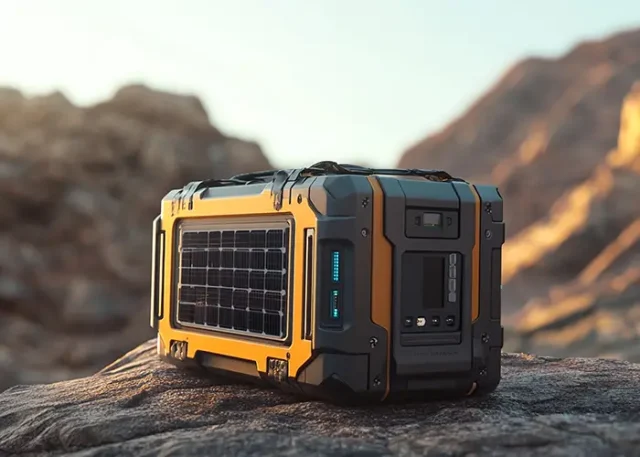
Power stations are basically giant battery packs with built-in outlets. They have taken off among modern travelers for one simple reason. They are silent. Zero noise. Zero fumes. Run one inside your van, on a cabin porch, or next to your tent. Nobody will complain.
The tech has gotten really good. Top units pack 1,000 to 3,000 watt-hours. They handle laptops, CPAP machines, and small appliances with ease. Most support pass-through charging. You plug in a solar panel and charge the battery while it powers your gear. Park in the sun. Unfold a panel. Free power all day.
Maintenance is a non-issue. No oil changes. No spark plugs. No fuel stabilizer. Charge it up. Store it. It works six months later. Many units weigh under 20 pounds now. Easy to toss in the trunk for a weekend trip or a boat ride.
The catch? Capacity and recharge time. Even a big power station cannot match a generator running around the clock. Run a fridge, two phones, some lights, and a small fan. A 1,500Wh unit lasts maybe a day. Solar recharging is slow. It takes six to ten hours of strong sun to refill fully. Cloudy days set you back. Wall charging is faster but useless when you are truly remote.
Cost is the other hurdle. A quality power station plus a solar panel kit costs two to three times what a similar generator costs.
Which One Fits Your Travel Style?
It comes down to how you travel. Big RV with AC, microwave, and multiple appliances? Get a generator. It gives you massive power and you can refuel anywhere.
Van lifer? Weekend camper? Someone who hates noise? A power station with solar panels is the way to go. It fits into a small space. It runs silently. It matches the eco-friendly mindset that draws people outdoors.
Some travelers now run both. A generator handles heavy loads and cloudy weeks. Solar and a power station cover daily use. Quiet most of the time. Fuel backup when you need it.
Off-grid travel does not mean giving up modern comforts. It means picking your power setup as carefully as your destination. Ask yourself three things. What do I need to run? How long will I be off-grid? How much noise can I stand? Answer those honestly and you will make the right call. Then stop staring at that battery icon and enjoy the view.