Every camping trip has a moment. The romance of the wilderness meets the reality of physics. A tent stake will not go into hard ground. A cooler latch snaps. A camp chair leg sinks into mud. Your dinner tilts toward the dirt. None of these are emergencies. But without the right tool, they sit right at the intersection of frustration and helplessness.
Experienced campers know something beginners figure out too late. A good toolkit weighs under five pounds. It packs smaller than a shoebox. It turns a campsite from a source of low-grade annoyance into a smooth-running outdoor home. You do not need a full workshop. You need exactly the right few items for the jobs that actually happen in the woods.
1. Multi-Tool
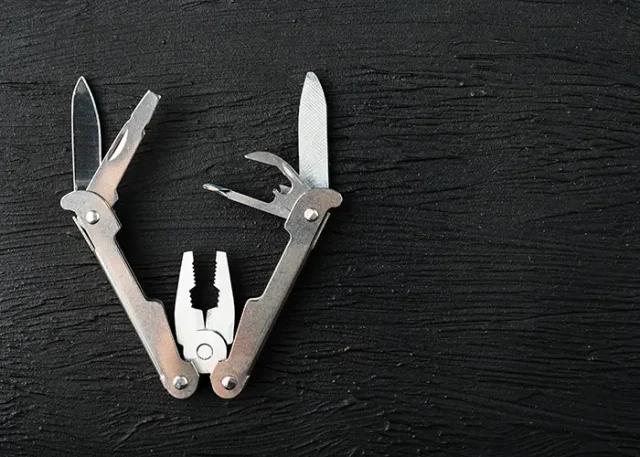
If you bring one thing, bring a good multi-tool. The pliers grip hot cookware. Pull stubborn stakes. Crimp wires. Pull splinters. The knife opens food packages. Cuts cord. Trims kindling. Slices cheese. The screwdrivers tighten stove fittings and replace headlamp batteries. The scissors cut tape, line, and tough meal pouches.
Get one with locking blades. A folding knife snapping shut on your fingers in the dark ends a trip fast. Spring-loaded pliers open on their own. This matters when your other hand holds a hot pot. A carabiner clip hooks it to your belt or pack strap. No digging through the bottom of a duffel.
2. Folding Saw
A compact folding saw weighs under a pound. It cuts branches up to four inches thick. Perfect campfire size. It beats swinging a hatchet every time. Faster. Safer. Less tiring after a long hike. The curved blade pulls sawdust out of each cut. No binding. The teeth are made for green wood. That is what you actually cut at a campsite.
Even in campgrounds with firewood provided, the saw trims kindling and cuts back branches scraping against your tent. Fold the blade when you pack it. These saws will slice right through pack fabric.
3. Headlamp
A headlamp keeps both hands free. Cooking after dark. Washing dishes. Adjusting the tent. Midnight bathroom trips. The red light mode saves your night vision. It does not blind your campmates. It also draws fewer bugs than white light. That matters more than you think when eating dinner.
Get a rechargeable one and pack a small power bank. A headlamp dead on night two is just dead weight.
4. Paracord
Paracord fixes campsite problems no dedicated tool can solve. It becomes a clothesline. A tarp guy line. A replacement shoelace. A broken zipper handle. A bear hang. Emergency tent pole repair. Splint it between two sticks. Wrap it tight.
Get 550-pound-rated cord. Strong enough for anything. Thin enough to pack. Store it in a quick-release bundle. Not a tight coil. You want to pull out what you need without tangling the rest. Learn a trucker’s hitch knot. A few feet of cord and that knot tension a tarp drum-tight in a storm. Practice at home before it matters at 2 AM in a downpour.
5. Rubber Mallet
Your boot heel drives tent stakes about half the time. The rest of the time you are hopping on one foot. The stake bends. The fly flaps in the wind. You curse quietly so neighbors do not hear. A compact rubber mallet ends this struggle. Or a stake driver with a hook for pulling them out. Both work.
The mallet also drives canopy, awning, and clothesline stakes. The hook pulls stakes hammered flush with the ground. Saves your fingers and your back. Counting ounces backpacking? A rock wrapped in a bandana is the ultralight version. Car camping? Just bring the mallet.
6. Duct Tape
Duct tape has fixed more camping gear than every warranty combined. Pack a small roll. Wrap it around a water bottle or pole. Not the full hardware-store roll. It patches tent fabric. Seals a cracked water jug. Reinforces a torn pack strap. Splints a broken pole.
In bad situations, it closes a wound when real supplies are not there. Last resort only. Not a replacement for a first-aid kit. Keep the roll clean in a zip-top bag. Duct tape sitting loose in a dusty pouch is useless when you need it.
7. Work Gloves
Camping beats up your hands. Moving firewood. Handling hot pots. Clearing thorny brush. Pulling rough rope. Lightweight work gloves save you. Leather palms. Breathable backs. They stop blisters, splinters, burns, and cuts. You still have full finger movement. They pack flat. Cost almost nothing. Earn their spot in the first hour of setup.
8. Socket Wrench Set
If your camp setup has bolts, bring a compact socket wrench. Camp stove. Portable grill. Bike rack. One loose bolt on a stove regulator means cold dinner instead of hot. A small kit handles it. 1/4-inch ratchet. A few common sockets. A bit driver with Phillips and flathead. Covers nearly every mechanical fix.
The driver bits also handle tiny screws on glasses and electronics. Trivial to fix at home. Impossible without the tool in the woods.
9. Tire Gauge and Inflator
Most campers drive to the site. That makes tire tools campsite tools. A gauge catches slow leaks before they become flats on a remote road. A portable inflator runs off the car outlet or a battery. It handles low pressure from temperature swings. It tops off tires after airing down for sand or rough ground.
A flat at the campsite is a problem. A flat ten miles before the campsite is a crisis. The gauge and inflator turn crisis into problem. That upgrade alone is worth the space.
10. A Dedicated Tool Bag
Tools scattered across the trunk, glovebox, and three backpacks are not a toolkit. They are a scavenger hunt. Pack everything in one tool roll or zippered bag. Canvas rolls with separate pockets work best. You see everything. Everything stays put. Hard cases protect delicate items but eat space. The goal is simple. Grab one bag. Set it by the problem. Everything within reach.
Make the bag easy to spot in low light. Bright color. Reflective strip. Glow tape on the zipper. Saves you from the headlamp search through identical black pouches in the dark.
Why This Matters
Campsite tools are not about preparing for disaster. They are about removing the small frustrations that pile up over a trip. The stake that fights you. The zipper that jams. The branch that needs cutting. The bolt that loosened. Each one is minor. Together, they decide whether camp feels like home or a series of small defeats.
Pack these ten items. Put them in one bag. Know where that bag lives. When something goes wrong, you fix it before frustration even shows up. That is what makes camping feel like a pleasure. Not a chore.