Finland has gained a new UNESCO World Heritage designation with the inscription of the Sunila residential area in Kotka as part of the newly recognized Aalto Works collection.
Designed by celebrated Finnish architect Alvar Aalto, Sunila is one of 13 buildings and architectural ensembles included in the serial World Heritage property. Together, the sites illustrate how Aalto, working with Aino Aalto, Elissa Aalto and members of his studio, adapted the principles of modern architecture to human needs, Finnish landscapes and changing social conditions.
The designation makes Aalto Works Finland’s eighth UNESCO World Heritage Site, joining established landmarks such as the Fortress of Suomenlinna and the historic wooden town of Old Rauma.
More than a collection of buildings
Located approximately 130 kilometers east of Helsinki, Sunila differs from many architectural landmarks because it was designed as an entire community rather than a single monumental structure.
The district was developed beside a pulp mill on the Gulf of Finland, near the mouth of the Kymi River. Its first buildings were completed in 1937 to provide housing and services for mill workers and their families.
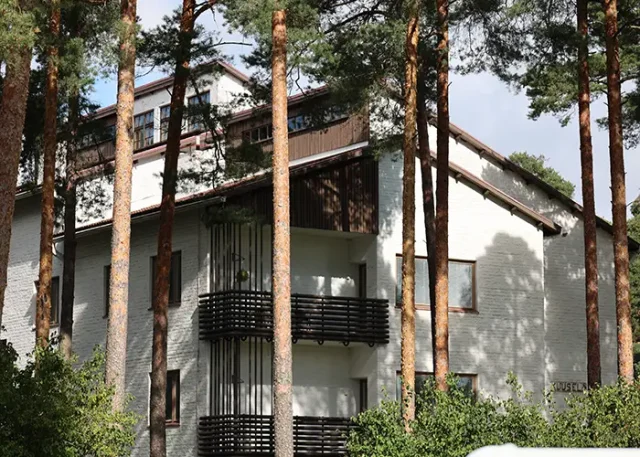
Sunila eventually grew into an interconnected community of apartment buildings, row houses, service structures and green spaces. Instead of separating homes from the surrounding landscape, Aalto positioned the buildings among pine trees and natural contours, allowing sunlight, views and vegetation to become part of daily life.
White facades, carefully positioned balconies and clean modernist lines give the district a recognizable architectural identity. Yet its importance extends beyond appearance. Sunila demonstrated how thoughtful planning and modern design could improve everyday living conditions for industrial workers.
Finland’s first forest suburb
Often described as Finland’s first forest suburb, Sunila helped establish ideas that would influence residential development elsewhere in the country.
Its buildings were placed within a wooded landscape rather than arranged along a rigid urban street grid. Footpaths, open lawns and stands of mature trees created a sense of space between the residences, while shared services supported life within the community.
The plan reflected Aalto’s belief that architecture should respond to human behavior, natural light and the character of its surroundings. His approach offered an alternative to the dense and often austere worker housing found in many European industrial communities during the early 20th century.
UNESCO inscribed the Aalto Works collection under cultural criterion (ii), recognizing the contribution the sites made to the exchange of architectural and planning ideas.
Nearly 90 years after construction began, Sunila remains an active residential neighborhood with approximately 1,100 residents. Its continued use adds another dimension to the visitor experience: this is not a preserved architectural museum, but a community where people still live in buildings created as part of Aalto’s original vision.
Architecture designed for everyday life
Sunila includes 12 apartment buildings and row houses, along with architecturally significant service buildings. The wider complex also includes the former mill manager’s residence, Kantola, which features seaside saunas and opens to visitors during parts of the summer.
Some apartments have been furnished according to the design principles associated with Aino and Alvar Aalto, allowing guests to experience the architecture from the perspective of those who live there.
This domestic quality makes Sunila an important addition to an Aalto-focused trip. Many of the architect’s best-known works are concert halls, cultural institutions and public buildings. Sunila shows how the same design philosophy was applied to kitchens, living rooms, balconies, gardens and neighborhood pathways.
The UNESCO designation also recognizes the wider role of Aalto’s architecture in the development of the Finnish welfare state. The collection represents a period when architecture was increasingly used to address public health, education, employment and social well-being.
An extension to an architecture trip from Helsinki
Five of the 13 UNESCO-listed Aalto Works are located in Helsinki: Finlandia Hall, the House of Culture, the headquarters of Finland’s Social Insurance Institution, the Aalto House and Studio Aalto.
These sites provide an accessible introduction to Aalto’s evolving architectural style. The Aalto House reveals the architect’s approach to domestic design, while Studio Aalto offers insight into his professional working environment.
Finlandia Hall, one of Helsinki’s most recognizable modern landmarks, recently emerged from an extensive renovation. Visitors can now explore exhibition spaces, a design shop and dining venues alongside the building’s concert and event facilities.
From Helsinki, travelers can continue east to Kotka to experience Aalto’s architecture on a considerably larger scale. Rather than viewing an individual house or civic building, visitors encounter a complete residential district shaped by the architect’s ideas.
Readers interested in Finland’s design traditions may also want to explore DRIFT Travel’s story about Helsinki Central Railway Station becoming a design hotel.
Sunila Aalto Homes opens private residences
The annual Sunila Aalto Homes event will take place August 29 and 30, 2026. During the weekend, approximately 20 private homes are expected to open their doors to architecture and design enthusiasts.
The event offers a rare opportunity to see how residents have adapted their homes while respecting the character of the original buildings. The program also includes talks, discussions, workshops and neighborhood activities.
Public hours are scheduled from 11 a.m. to 5 p.m. on both days.
Visitors who cannot attend the event can still explore the district’s architecture and wooded surroundings. However, because Sunila remains a residential community, travelers should respect private property and view buildings only from public paths unless participating in an authorized tour.
A new reason to explore eastern Finland
The World Heritage designation brings greater international attention to Kotka, a maritime city better known for its parks, archipelago, museums and relationship with the Gulf of Finland.
Sunila adds architectural tourism to that list. It also provides a compelling reason for design-minded travelers to extend a Helsinki visit and discover a different side of Aalto’s work.
Those planning a wider journey through the country can find additional inspiration in DRIFT Travel’s guide to Western Lakeland, a sustainable destination in the heart of Finland.
By recognizing Sunila as part of Aalto Works, UNESCO has highlighted a place where architecture, industrial history and ordinary life remain closely connected. The district’s greatest achievement may be that, nearly nine decades after its creation, it continues to function as Aalto intended: not simply as a design landmark, but as a living community shaped by nature.