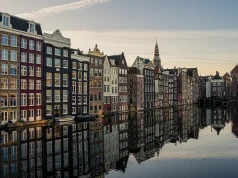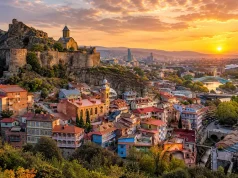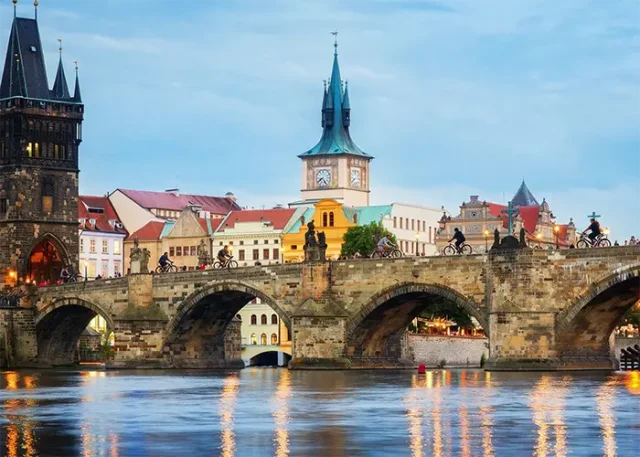
Cycling from Berlin to Prague turns the journey between two great European capitals into an adventure of its own. Instead of seeing Germany and Czechia through a train window, riders move gradually from Berlin’s parks and Cold War landmarks to the palaces of Potsdam, the riverside architecture of Dresden, the sandstone formations of Saxon and Bohemian Switzerland, and the vineyards surrounding Mělník.
It is also a more flexible trip than the phrase “Berlin to Prague bike tour” might suggest. Travelers can tackle a continuous long-distance route, join a supported self-guided departure or choose a shorter guided vacation that combines carefully selected rides with vehicle transfers. Understanding those differences is the key to booking the right experience.
How Long Is the Berlin to Prague Cycling Route?
There is no single mandatory trail between the two capitals. The most established long-distance option uses sections of the EuroVelo 7 Sun Route, Germany’s R1 route and the Elbe Cycle Route. Taken together, this itinerary covers approximately 530 kilometers, or about 330 miles.
A continuous journey usually requires between nine and 13 riding days, depending on daily distances, rest days and sightseeing stops. Cyclists averaging 45 to 60 kilometers per day will have time to explore towns along the way rather than treating every stage as a race.
Shorter guided trips are different. A six-day itinerary may include excellent riding around Berlin, Potsdam, the Spreewald and the Elbe Valley, but it will generally use transfers between cycling areas. That can be ideal for travelers who value comfort and variety, but it should not be confused with riding the entire distance from one capital to the other.
Highlights Along the Way
Berlin and Potsdam
Berlin deserves at least one full day before the trip begins. A ride along part of the Berlin Wall Trail offers a useful introduction to the city’s modern history, while its parks, waterways and expanding cycling network make it relatively easy to explore on two wheels.
Southwest of the capital, Potsdam provides an immediate change of pace. Sanssouci Palace, formal gardens and the Dutch Quarter make the city much more than an overnight stop. Travelers arriving early can also review DRIFT’s look at The Dean Berlin in Charlottenburg when choosing a base in the capital.
Wittenberg, Torgau and Meissen
The middle stages move through quieter landscapes and historically important towns. Lutherstadt Wittenberg is closely associated with Martin Luther and the Protestant Reformation, while Torgau combines Renaissance architecture with significant Second World War history.
Approaching Meissen, the Elbe becomes the organizing feature of the journey. The town is famous for porcelain, a hilltop castle and a compact old center that rewards an unhurried evening walk.
Dresden and the Elbe Valley
Dresden is one of the route’s essential rest stops. Reconstructed landmarks, museums and the broad riverfront create a dramatic contrast with the smaller communities encountered earlier in the journey. Cyclists can follow the Elbe through a landscape of vineyards, historic estates and riverside communities before entering increasingly rugged scenery.
Saxon and Bohemian Switzerland
Between Bad Schandau and Děčín, the Elbe cuts through a landscape of cliffs, forest and sculpted sandstone. The river route avoids the most demanding terrain, but riders should still expect occasional climbs, changing surfaces and tempting hiking detours.
This is a section where a flexible schedule pays off. An extra night makes it possible to get off the bike and explore a trail or viewpoint in either Saxon Switzerland National Park or Bohemian Switzerland National Park.
Litoměřice, Mělník and Prague
In Czechia, the Elbe passes Děčín and continues toward Litoměřice, a colorful town near Terezín. Anyone visiting the Terezín Memorial should allow sufficient time and approach the site with the respect its history demands.
Farther south, Mělník overlooks the meeting point of the Elbe and Vltava rivers. Its long winemaking tradition and elevated river views make it a natural final stop before following the Vltava toward Prague.
Arriving in Prague by bicycle is a memorable finale, but it is worth scheduling another two nights after the ride. That leaves time for Prague Castle, Charles Bridge, the Old Town and a celebratory dinner. Food-focused travelers can also explore DRIFT’s coverage of Czechia’s expanding Michelin-recognized dining scene.
Current Ways to Cycle Between Berlin and Prague
The Butterfield & Robinson departure previously featured on this page is no longer offered as a scheduled tour. However, several current alternatives serve different types of cyclists.
| Travel style | Typical format | Best for |
|---|---|---|
| Guided luxury tour | About six days, with selected rides, guides and vehicle transfers | Travelers who want premium hotels, support and moderate daily mileage |
| Supported self-guided tour | About 13 days and approximately 530 kilometers, often with luggage transfers | Independent riders who want to complete most or all of the route |
| Longer historical tour | Berlin-to-Prague segment within a multi-country itinerary | Stronger cyclists interested in Cold War and Central European history |
| Private bespoke trip | Custom route, duration, accommodations and activity level | Families or private groups seeking maximum flexibility |
Backroads currently operates a six-day Berlin to Prague bike tour with departures listed for 2026 and 2027. Its itinerary combines riding around Berlin, Potsdam and the Spreewald with selected countryside stages and transfers, rather than presenting itself as a continuous 530-kilometer expedition. An easygoing e-bike version is also available.
For riders who want a longer point-to-point journey, AugustusTours offers a 13-day Prague-to-Berlin itinerary along the Elbe Cycle Route and R1. The route is approximately 530 kilometers and can be approached in reverse when independently planned, although packaged-tour direction and departure dates should always be confirmed with the operator.
Ride & Seek’s Iron Curtain tour can be divided into an eight-day Berlin-to-Prague section. It follows a different historical arc through the Oder-Neisse region, Görlitz and the Czech countryside. DRIFT has also covered the longer Berlin-to-Budapest Iron Curtain cycling journey.
Butterfield & Robinson now promotes bespoke travel in the Czech Republic, including cycling itineraries that can be combined with Germany. Travelers interested in recreating elements of the former tour would need to request a custom proposal; the original scheduled itinerary should not be assumed to be available.
Tour schedules, routes and inclusions can change, so travelers should verify current details directly before booking flights.
When Is the Best Time to Go?
The practical cycling season generally runs from April through October, which is also the operating window published by current self-guided tour providers. For many riders, late May through June and September offer the most appealing balance of daylight, moderate temperatures and manageable visitor numbers.
July and August provide long days but can bring hotter weather, busy attractions and greater competition for accommodations. April and October can be rewarding for experienced touring cyclists, although cooler temperatures, rain and shorter daylight hours require more flexible planning.
Regardless of the month, pack for changing conditions. A waterproof layer, light insulation and quick-drying clothing belong in every pannier.
Is the Route Suitable for Beginners?
The river sections are generally approachable, and VisitCzechia describes the Elbe Route as having a relatively undemanding elevation profile. That does not make the full journey effortless. Consecutive riding days, city navigation, occasional hills, mixed surfaces and wind can be more tiring than any single stage suggests.
A reasonably active first-time cycle tourist can enjoy the route with preparation. Before leaving, complete several back-to-back rides while carrying the gear you plan to use. Those uncomfortable riding 50 kilometers on consecutive days should allow more time, choose an e-bike or book a supported itinerary with shorter mileage options.
What Kind of Bike Is Best?
A touring, trekking or gravel bike with reliable brakes, low gears and tires wide enough for occasional rough surfaces is the most versatile choice. A conventional road bike can work on a carefully planned paved route, but narrow tires provide less flexibility when paths deteriorate or construction forces a detour.
E-bikes make the journey accessible to a broader range of riders, especially groups with different fitness levels. Confirm charging arrangements, battery range and transportation rules before departure. Riders bringing their own bicycles should also reserve train space where required rather than assuming every service will accept an assembled bike.
Useful equipment includes:
- A properly fitted helmet and cycling gloves
- Padded shorts and quick-drying layers
- Waterproof jacket and shoe covers
- Two spare tubes or a tubeless repair kit
- Pump, tire levers and a compact multitool
- Front and rear lights, even for daytime riding
- Refillable bottles and daily snacks
- Offline maps or GPX files backed up on a second device
- A strong lock for sightseeing and meal stops
Should You Ride Independently or Join a Tour?
Independent travel provides complete control over mileage, hotels and rest days. The EuroVelo and Elbe route networks supply a strong foundation, but cyclists remain responsible for navigation, repairs, luggage and last-minute changes.
A self-guided package preserves much of that independence while arranging accommodations, luggage transfers and route information. Fully guided tours add local expertise, mechanical support and transportation, usually at the cost of following a set schedule and cycling only selected sections.
The best choice depends less on cycling speed than on how much logistical responsibility you want during the vacation. Whichever format you choose, the landscapes and historical layers between Berlin and Prague justify taking the slower road.
Frequently Asked Questions
How far is it from Berlin to Prague by bicycle?
An established route using EuroVelo 7, the Elbe Cycle Route and Germany’s R1 network is approximately 530 kilometers, or about 330 miles. Alternative itineraries may be shorter or substantially longer.
How many days are needed to cycle from Berlin to Prague?
Most cyclists should allow nine to 13 riding days for a largely continuous journey. A shorter guided vacation can be completed in about six days by combining selected rides with vehicle transfers.
Can beginners complete the route?
Yes, provided they are comfortable with consecutive days in the saddle and choose manageable daily distances. A supported tour, luggage transfer or e-bike can make the experience more accessible.
Can the route be cycled in either direction?
The route can be independently planned from Berlin to Prague or Prague to Berlin. Organized tours may operate in only one direction, so confirm the starting city before arranging flights or train travel.
Is a guide necessary?
No. Experienced cycle tourists can plan the journey using EuroVelo and regional route information. A guide or supported package is valuable for travelers who prefer luggage transfers, mechanical assistance, curated hotels and less navigation work.