

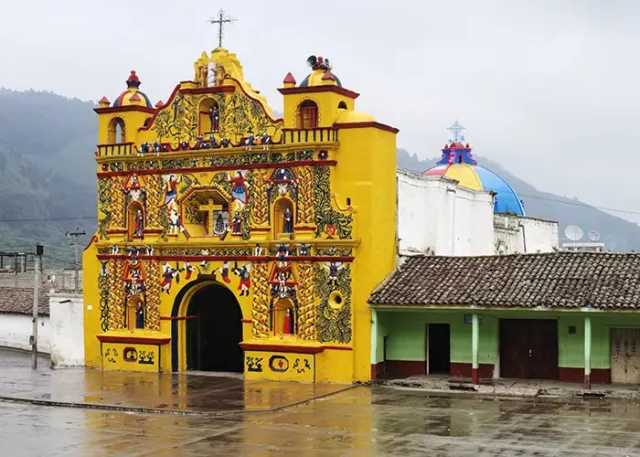
Few destinations offer photographers as much visual variety as Guatemala. Colonial streets unfold beneath towering volcanoes, Maya temples rise above tropical forests and brilliantly woven textiles bring color to markets and highland communities.
The country’s appeal is not limited to a handful of famous viewpoints. Compelling photographs can be found in weathered doorways, quiet village streets, lakeside docks, crowded produce markets and the changing expressions of the landscape throughout the day.
Whether working with a professional camera, a compact travel camera or a smartphone, visitors will find abundant opportunities to capture Guatemala’s architecture, scenery and living cultural traditions.
Photographing the Architecture of Antigua Guatemala
Antigua is one of Guatemala’s most rewarding destinations for architectural photography. The former colonial capital is known for cobblestone streets, colorful façades, interior courtyards and historic churches framed by mountains and volcanoes.
Founded in the 16th century, Antigua was largely destroyed by earthquakes in 1773. Its surviving monuments and street plan reflect a combination of Renaissance planning and regional building traditions. The city was designated a UNESCO World Heritage Site in 1979.
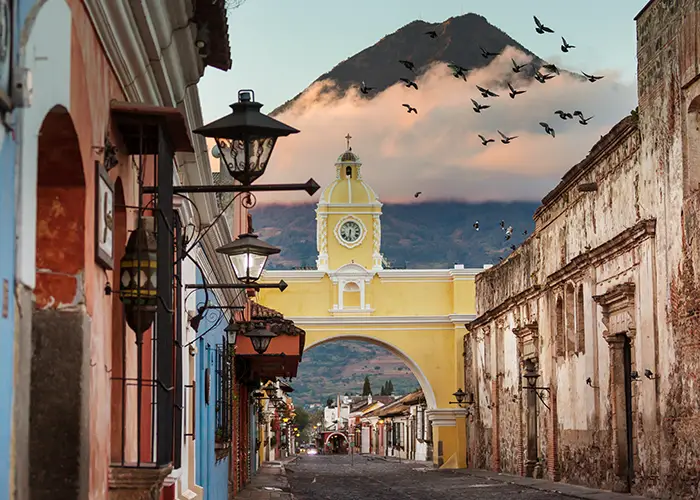
The Santa Catalina Arch is Antigua’s most recognizable landmark. Early in the morning, photographers may find softer light and fewer pedestrians, while late afternoon can bring warmer tones to its yellow façade. On a clear day, Volcán de Agua creates a dramatic backdrop.
Other architectural subjects include the ruins of Antigua Guatemala Cathedral, the Church and Convent of La Merced and the weathered remains of churches and monasteries throughout the historic center.
Some of Antigua’s best images are found beyond its major landmarks. Painted walls, wooden doors, window grilles, flower-filled courtyards and local street scenes reveal the details that give the city its character.
Lake Atitlán and Its Volcanic Scenery
Surrounded by steep hills and volcanoes, Lake Atitlán presents an entirely different photographic landscape.
The appearance of the lake changes throughout the day. Early mornings are often calmer, with softer light and clearer reflections. As the day progresses, wind, clouds and boat traffic can add movement and texture to the scene. Sunset sometimes transforms the surrounding volcanoes into dark silhouettes against layers of color.
Panajachel is the main gateway to the lake and provides broad views across the water. Boats connect it with communities such as San Juan La Laguna, Santiago Atitlán, Santa Catarina Palopó and San Pedro La Laguna.
Each community has its own architecture, clothing, crafts and relationship with the surrounding landscape. San Juan La Laguna is particularly known for painted murals, weaving cooperatives and colorful streets. Santa Catarina Palopó has become recognizable for brightly painted buildings inspired by patterns found in traditional Maya textiles.
Photographers should spend time in one or two communities rather than rushing around the entire lake. Staying overnight provides access to the quieter early-morning and evening light that day visitors may miss.
Travelers can also explore Guatemala from the water, from volcanic lakes to jungle rivers and the Pacific coast, in this guide to Guatemala’s unique water adventures.
Tikal: Maya Temples Above the Forest
In northern Guatemala, Tikal offers one of the country’s most extraordinary combinations of architecture and nature.
The ancient Maya city is surrounded by the forests of Petén. Temples, ceremonial platforms, plazas and stone monuments appear between towering trees, creating images that communicate both the scale of the structures and the landscape that surrounds them.
Tikal National Park is recognized by UNESCO for both its cultural significance and natural environment. Its archaeological remains document an important Maya political, economic and ceremonial center, while the wider park protects tropical forest and diverse wildlife. UNESCO World Heritage Centre
Wide-angle lenses are useful for photographing plazas and temples, while a telephoto lens can help isolate architectural details or capture wildlife at a respectful distance. Monkeys, coatis, toucans and other birds may be encountered around the park.
Visitors should remain on approved paths, follow instructions from park staff and never climb structures unless access is specifically permitted. A local guide can provide historical context while helping visitors notice architectural and natural details that might otherwise be overlooked.
The Colors of Chichicastenango
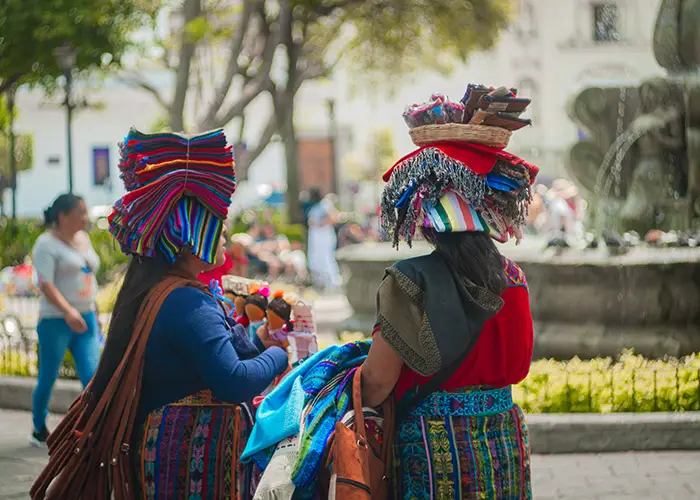
Chichicastenango is widely associated with one of Guatemala’s best-known highland markets. Vendors gather to sell textiles, produce, pottery, flowers, masks and household goods, creating a dense and constantly changing visual environment.
The market offers strong compositions through color, repetition and texture. Stacks of fruit, handwoven fabrics, baskets and flower displays can become compelling subjects without requiring a conventional landscape.
The white Church of Santo Tomás rises above the market and remains an important religious site. Maya spiritual traditions and Catholic practices coexist here, and visitors may encounter ceremonies on or around the church steps.
Photography requires particular sensitivity in Chichicastenango. The market is a place of work and community life, not simply a visitor attraction. Always request permission before taking a close portrait, respect anyone who declines and avoid photographing private ceremonies unless explicitly invited.
Buying directly from artisans can be a meaningful way to support local work, but purchasing an item does not automatically grant permission to photograph its maker.
For a broader look at the destination, discover why Guatemala is emerging as one of Central America’s rising travel stars.
Maya Textiles and the Language of Color
Guatemala’s handwoven textiles are among the country’s most visually distinctive cultural traditions.
Colors, patterns and garment styles can reflect regional identity, community traditions and individual creativity. The huipil, a traditional woven blouse worn by many Maya women, may incorporate geometric designs, animals, flowers and other symbolic elements.
Cooperatives and community workshops can provide opportunities to learn about spinning, natural dyes, backstrap weaving and embroidery. These settings can also produce thoughtful documentary photographs when visits are arranged respectfully and participants understand how the images will be used.
Photographers should avoid treating traditional clothing as an exotic costume. Learning about the people, skills and cultural meanings behind the textiles results in stronger and more responsible storytelling.
Volcanoes, Highlands and Open Landscapes
Guatemala’s volcanic highlands provide opportunities for landscape and adventure photography.
Acatenango is known for views toward active Volcán de Fuego, particularly around sunset, overnight and sunrise. The hike is physically demanding, reaches a high elevation and can involve cold, wind and rapidly changing conditions. Travelers should choose an established guide, carry appropriate equipment and honestly assess their fitness before attempting it.
Volcán Pacaya offers another volcanic landscape within reach of Antigua and Guatemala City. Conditions and access can change according to volcanic activity, so visitors should follow official guidance and never cross closed areas in pursuit of a photograph.
Elsewhere, mountain roads, agricultural fields and highland valleys create layered compositions, particularly when mist settles between the ridges.
Río Dulce and Guatemala’s Caribbean Side
Eastern Guatemala introduces lush vegetation, river scenery and Caribbean influences.
Río Dulce winds between Lake Izabal and the Caribbean coast, passing through forested canyons and communities reached by boat. Reflections, waterside homes, fishing boats and birdlife make it an appealing destination for both landscape and documentary photography.
Near the river’s mouth, Livingston has a cultural character shaped in part by the Garifuna community. Music, food, waterfront scenes and brightly painted buildings distinguish it from Guatemala’s highland destinations.
As in other communities, photographers should seek permission before making portraits and take time to understand local customs.
The Black-Sand Pacific Coast
Guatemala’s Pacific shoreline presents a quieter, more elemental type of scenery.
Volcanic sand, rolling surf, fishing boats and expansive skies create minimalist compositions. The dark beach can produce strong contrasts at sunrise and sunset, particularly when wet sand reflects the changing sky.
Coastal wildlife and nesting areas require care. Flash photography, drones and close approaches can disturb birds and sea turtles, so photographers should follow local conservation rules and guidance.
Capturing Everyday Guatemala
Not every memorable photograph needs to feature a major landmark. Some of the country’s most evocative images are found in everyday moments.
Colorful buses, roadside fruit stalls, flower markets, café courtyards and village plazas can all help tell a fuller story of the destination. Details such as painted signs, tiled floors, cooking utensils and hands working at a loom can complement wider landscapes and architectural images.
Patience is often more valuable than expensive equipment. Waiting for the right light, watching how people move through a scene and returning to the same location at different times can produce more distinctive photographs than trying to document everything quickly.
Responsible Photography in Guatemala
Photography can create connections, but it can also make people feel observed or exploited. A few principles help visitors work more respectfully:
- Ask before taking recognizable portraits.
- Accept “no” immediately and graciously.
- Avoid photographing children without permission from a parent or guardian.
- Do not interrupt religious ceremonies or private moments.
- Learn a few polite phrases in Spanish or the locally spoken Maya language.
- Do not enter private property for a better angle.
- Follow restrictions at archaeological sites, churches and museums.
- Check local rules before flying a drone.
- Never damage plants, buildings or archaeological remains to improve a composition.
- Be cautious when displaying expensive camera equipment in crowded areas.
Travel conditions and security advice can change. Photographers should consult current government travel advisories, arrange reliable transportation and avoid walking with conspicuous equipment in unfamiliar areas after dark.
When to Photograph Guatemala
Guatemala’s dry season generally brings clearer skies and easier travel, while the rainy season can produce greener landscapes, dramatic clouds and fewer visitors.
Neither season guarantees perfect conditions. Mountain weather can change quickly, and mist or rain may become part of the visual story rather than an obstacle.
Early morning and late afternoon usually provide the most flattering natural light. These hours can also offer quieter streets, calmer lake conditions and a more relaxed atmosphere.
A Destination That Rewards Curiosity
Guatemala is a photographer’s paradise because it offers more than a collection of spectacular views. Its visual identity emerges from the relationship between landscape, architecture and culture.
Antigua’s colonial buildings sit beneath volcanoes. Maya temples rise through the Petén forest. Lake Atitlán reflects mountains and changing skies, while highland markets and textiles introduce layers of color and human creativity.
The strongest photographs will come from travelers who slow down, observe carefully and approach Guatemala’s communities with respect. In return, the country offers seemingly endless ways to capture a sense of place.


[…] that long ago, Guatemala wasn’t a dream destination for most couples. However, since this well-kept secret has been […]