

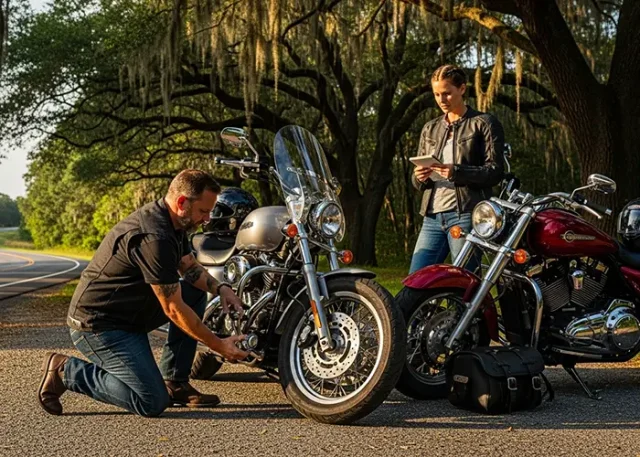
Summer is one of the best times to ride through the state, whether you’re aiming for the coast, the Midlands, or the Upstate. Riding more safely comes down to understanding a handful of recurring risks. Recent crashes point to the same repeatable patterns: left-turn conflicts, rural intersection hazards, and high-speed night wrecks.
A safer ride usually starts long before you leave the driveway. Just as you might prep for brutal midday heat by studying how to survive in the desert, setting up your motorcycle for summer conditions matters just as much. Consider this: although motorcycles account for only 3% of registered vehicles, motorcyclists accounted for 16.2% of all traffic fatalities in 2024. Small, practical decisions about where, when, and how you ride can move those odds in your favor.
Start with the bike you’re actually riding today
Check tire pressure before hot-weather rides
Heat changes tire pressure fast, and road surface temperatures often run far above the air temperature you feel. Check your pressure when the tires are cold, and use the manufacturer’s recommended PSI rather than guessing. This is where summer bites: hot pavement piles extra stress on tires that are already worn.
Underinflation reduces stability and allows dangerous heat to build up inside the tire carcass. Overinflation shrinks the contact patch and makes a long trip feel harsher. Catching those swings before you roll keeps your handling sharp and predictable.
Inspect the tread, sidewalls, and age before a weekend trip
Take a few minutes to thoroughly inspect your tread depth, sidewall cracks, and overall tire condition. Look for punctures, uneven wear, and damaged valve stems before you pack the saddlebags. If your tires have some years on them, check the manufacturing date code to confirm the rubber hasn’t degraded.
Hot pavement punishes weak tires and makes a sudden failure far more likely on long stretches of highway. A quick visual check buys you peace of mind and gets the bike ready for whatever the weather does next.
Make a quick heat-ready rider check
Your own readiness counts as much as the mechanical state of the bike. Drink plenty of water before and during stops, because heat fatigue slows both your judgment and your reaction time. Check your visor clarity, brake lever feel, and chain or belt condition before you hit the highway.
Confirm your brake lights, headlights, and turn signals all work, since visibility matters enormously during sudden summer storms. This quick check helps the bike respond exactly as you expect when traffic slows without warning. It also ensures you are riding strictly by the book, which is a great way to protect yourself if an accident occurs and you have to fight what is biker bias, the unfair assumption held by insurance adjusters and drivers that motorcyclists are inherently reckless on the road.
| Tire pressure | Heat changes pressure and handling | Check cold PSI against manufacturer spec |
| Tread and sidewalls | Hot pavement stresses weak tires | Look for wear, cracks, and punctures |
| Brakes | Longer trips and traffic demand consistency | Test lever feel and pad response |
| Lights and signals | Visibility matters in storms and at dusk | Confirm brake light, headlight, and turn signals |
| Fluids/chain | Heat and distance increase wear | Inspect levels and chain tension/lube |
| Rider hydration | Heat fatigue slows judgment | Drink water before and during stops |
Slow down where South Carolina roads get unpredictable
Treat rural intersections like a hazard zone
Many serious crashes happen in specific road environments, especially changing-speed corridors and rural crossroads. A recent fatal York County crash at the intersection of Garvin Road and Ashe Road involved a motorcyclist trying to avoid a sudden collision. Non-urban routes tend to give drivers fewer visual cues, so they roll through stop signs without noticing an approaching motorcycle.
At rural intersections, assume sightlines will be poor due to overgrown summer vegetation. Speed differences are also much harder to judge for a driver pulling onto the highway from a dead stop. Taking these crossings seriously drops your risk right away.
Roll off the throttle before cross streets, not inside them
The best time to create a reaction room is before you enter the conflict area. Rolling off the throttle slightly as you approach a cross street gives you extra seconds to adjust your lane position or brake. That single habit shrinks your margin for error more than almost anything else you can do.
Waiting until you’re inside the intersection to react to a careless driver usually kills your escape options. Build a little extra space into the ride, and you stay in control.
Watch for road surface changes on smaller-town and county routes
As you move from major highways onto local Orangeburg routes, the Rock Hill outskirts, or Upstate connector roads, pavement quality often shifts under you. Watch for sudden rain slicks, tar snakes, and loose gravel near driveways. Uneven pavement edges and active construction zones often show up near busy vacation traffic.
Preventing a crash here means reading the road surface well ahead of your front wheel. Spot that patched pavement early, and you can loosen your grip and let the suspension soak up the bumps.
Expect left-turn mistakes from other drivers
Why left turns are one of the biggest threats to riders
Intersections are a primary location for catastrophic collisions. Safety data reveals that nearly 42% of all accidents involving both a car and a motorcycle are caused by a vehicle making a left-hand turn directly in front of the rider. Furthermore, in collisions involving multiple vehicles, the other driver is found to be at fault 66% of the time.
So why does this keep happening? Because drivers are scanning for larger shapes like trucks and SUVs, a narrow motorcycle profile may not register at all. Recognizing that pattern is one of the most effective ways to anticipate driver errors before they unfold.
South Carolina examples show the pattern clearly
Local incident reports show how often these left-turn collisions occur during the summer travel season. A fatal crash in Horry County happened after a car attempted a left turn and struck a motorcycle directly. In a comparable incident reported in York County, a motorcyclist crashed after being forced to take evasive action when another vehicle pulled directly across their path.
These crashes make one thing plain: having the legal right of way doesn’t physically protect you from a turning vehicle. Assume drivers don’t see you until they prove otherwise by coming to a full stop.
Make yourself easier to read, not just easier to see
Adjusting your lane position improves your visibility and helps drivers gauge your approach speed. Keep your eyes on a vehicle’s front wheels rather than the driver’s windshield, because the wheels give you the earliest sign of movement. Anticipate looked-but-failed-to-see errors by covering your brakes whenever you approach a waiting car.
Based on total mileage driven in 2023, the fatality rate for motorcyclists in accidents was roughly 28 times higher than that of passenger vehicle occupants. Keeping that statistical reality in mind allows you to maintain a defensive mindset on the road without ruining the thrill of the ride.
A few habits do most of the heavy lifting at intersections:
- Roll off slightly at busy intersections, even when you clearly have the legal right of way.
- Track the front wheels of waiting cars for the earliest physical clue that a distracted driver is creeping forward.
- Use lane position to open your sightline, shifting out of traffic blind spots rather than just staying centered.
- Cover the brakes and plan an escape path before you actually need one.
- Don’t linger in a driver’s blind zone near turn lanes, medians, and business entrances.
Save the fast riding for daylight and open sight lines
Why high-speed night riding is a bad summer trade
Riding fast after dark strips away the reaction time you need to spot hazards, wildlife, or roadway debris. A Lexington County fatal crash on I-77 involved a 21-year-old rider traveling at a high rate of speed overnight before striking a barrier. Another Greenville County fatal crash occurred around 9 p.m. when a motorcycle veered off the roadway.
Safe night riding starts with admitting your vision is badly compromised once the sun drops. Add speed to that, and you risk outrunning your ability to stop when something blocks your lane.
Darkness cuts your options faster than most riders expect
Reduced depth perception and the temptation to overdrive your headlights make night riding inherently risky. It gets much harder to read road edges, spot loose gravel, or pick out impaired and fatigued drivers sharing the lane. On unfamiliar coastal routes or mountain passes, that reduced hazard detection leaves you with almost no room to react.
Plenty of single-vehicle crashes happen because a rider entered a dark curve too fast and panicked. Keeping your speed moderate after sundown is one of the simplest ways to dodge that mistake.
If you want the scenic ride, leave earlier
Planning morning departures helps you skip both the punishing afternoon heat and the dangers of riding after sunset. Think coastal sunrise runs near the beach or early Upstate loops before peak traffic builds. The ride feels more relaxing, and you’re sharper for it.
Skipping the late-night interstate slog after a long, tiring beach day keeps you alert and cuts your crash risk sharply. Riding fresh in morning light beats fighting fatigue on a dark, busy highway every time.
Ride for the conditions in each South Carolina region
Columbia and the Midlands
Riding safely in Colombia means managing extreme urban heat and frequent afternoon thunderstorms. The wider suburban roads quietly invite speed creep, so keep an eye on your speedometer as traffic flows. Stay especially alert at suburban intersections where daily commuters may be buried in their phones.
Heat radiating off multi-lane asphalt can dehydrate you fast in stop-and-go traffic. Plan routes that avoid the heaviest congestion during peak hours near the city center.
Myrtle Beach and the Grand Strand
Riding around Myrtle Beach takes patience with heavy tourist traffic and distracted drivers who don’t know the local roads. Expect sudden left turns into beach access lots and thick evening congestion along the main commercial strips. Beach-day fatigue often leads drivers to merge into the next lane without signaling.
Keep your following distance generous, because cars stop abruptly to gawk at attractions. Defensive riding earns its keep when you’re sharing the road with thousands of vacationers.
Greenville, Rock Hill, and the Upstate
Up here, the focus is on navigating curving connector roads and shifting elevations. Both Greenville and Rock Hill require caution when making quick transitions from urban streets to shaded, semi-rural roads. Watch for damp pavement in heavily wooded curves, even on bright, sunny days.
Mountain-edge roads deliver incredible scenery, but they also hide blind corners and steep drop-offs. Keep your speed in check so you can soak up the sweeping views without gambling on a crash.
Orangeburg and smaller-town corridors
Around Orangeburg, anticipate variable pavement and sudden cross traffic from hidden driveways. These county roads often have fewer streetlights after dark, which makes visibility a real concern for evening riders. Scan the wide shoulders for farm equipment or wildlife crossing the road.
Rural drivers are used to empty roads and may not look twice before pulling out. Give yourself more reaction time by easing off as you pass through small-town limits.
Be prepared for the moment you hope never comes
Keep your emergency and insurance details where someone can find them fast
Keep an emergency contact card, your ID, and your insurance card in an easy-to-reach jacket pocket. Set up your phone’s lock screen emergency medical info so first responders can access it quickly. Make sure your roadside rescue information is easily accessible, and remember to send your real-time tracking coordinates to a trusted contact whenever you head out alone.
Being ready takes the panic out of a breakdown or a minor spill. With your documents organized, you can handle roadside issues far more calmly.
After a crash, protect yourself before opinions harden into blame
After a collision, it’s common for a driver, witness, or insurance adjuster to assume the motorcyclist was speeding or taking risks before anyone knows the facts. If early comments at the scene or from an insurer seem to pin fault on the rider too soon, it helps to understand biker bias, especially in South Carolina, where fault rules and preserved evidence shape what happens next. That resource walks through South Carolina’s modified comparative fault rule, common helmet-law misconceptions, and the types of evidence injured riders should preserve.
Because juries may assign more fault to riders than the evidence supports, documenting the facts is one of your strongest protections. You have to advocate for your own safety and your own rights.
Preserve the details while they’re still fresh
If you’re physically able, photograph the scene, the vehicle positions, and the road conditions right away. Save your helmet, riding gear, and the motorcycle in their post-crash condition instead of tossing them or rushing to repair them. Collect names from any witnesses, note the exact time and weather, and get a full medical evaluation. Avoid casual admissions of fault at the scene, since adrenaline can scramble your memory of what happened.
A smoother summer ride usually comes from smaller choices
Safer summer riding in South Carolina is rarely about one dramatic maneuver to dodge a hazard. It leans on a series of simple, consistent habits that build extra space and time into your trip. Checking cold tires, easing off before rural intersections, anticipating left turns, and skipping high-speed night riding can completely reshape your risk profile.
Good preparation lets you enjoy the coastal highways, the Midlands, and those sweeping mountain-edge roads with real confidence. Keep your emergency info organized and know how to protect yourself, and you can put your full attention on the ride. Make these small choices a habit, and your summer road trips stay memorable for the right reasons.