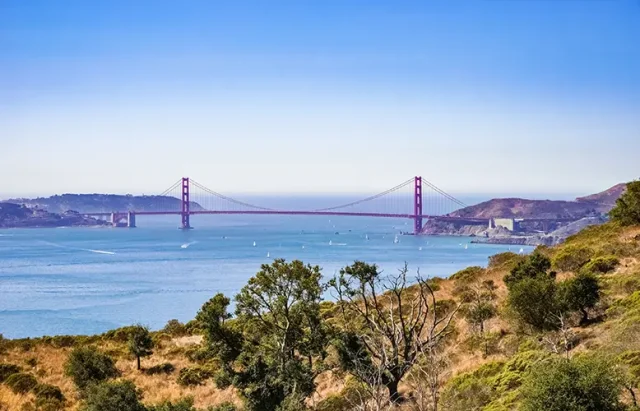
San Francisco may be famous for cable cars, colorful neighborhoods and the Golden Gate Bridge, but the city is also emerging as one of America’s most compelling destinations for urban hiking.
Beaches, coastal forests, historic military sites and rugged blufftop trails sit within the city limits, allowing travelers to combine outdoor exploration with San Francisco’s acclaimed restaurants, museums and cultural attractions.
The latest addition is the Golden Gate Dozen, a roughly 13-mile hiking and cycling route connecting 12 national park sites between Crissy Field and Fort Funston. Developed by the Golden Gate National Parks Conservancy in collaboration with the National Park Service, the route offers a new way to experience the city’s western waterfront.
Visitors can complete the entire route in a day or divide it into shorter sections according to their available time, interests and fitness levels.
The Golden Gate Dozen Connects 12 Park Sites
The Golden Gate Dozen demonstrates how closely San Francisco’s urban landscape is connected to the Golden Gate National Recreation Area.
The route begins at Crissy Field before continuing through Presidio Tunnel Tops, Fort Point, the Golden Gate Bridge, Baker Beach and the Presidio. It then reaches China Beach, Lands End, Sutro Baths, Sutro Heights, Ocean Beach and Fort Funston.
Together, the 12 stops offer a combination of coastal scenery, wildlife habitats, historic landmarks and some of the city’s most recognizable views.
The official route is available through AllTrails, with separate directions for hikers and cyclists. The Golden Gate National Parks Conservancy also provides detailed segment information and accessibility suggestions on its Golden Gate Dozen guide.
Starting at Crissy Field
Crissy Field provides a relatively gentle introduction to the route. Its mostly flat waterfront promenade passes restored marshland and offers views of the Golden Gate Bridge, Alcatraz Island and San Francisco Bay.
The area is popular with walkers, runners, cyclists and birdwatchers. Its open landscape and accessible paths also make it suitable for visitors who may not want to undertake the hillier sections farther along the route.
From Crissy Field, the trail leads toward Presidio Tunnel Tops, a 14-acre park created above the Presidio Parkway tunnels. Walking paths, lawns, picnic areas, gardens and cultural programming are set against panoramic views of the bridge and bay.
Visitors planning a broader city itinerary can combine this section with ideas from DRIFT’s 48 Hours in San Francisco, which also highlights Crissy Field and its waterfront trails.
History Beneath the Golden Gate Bridge
The next major stop is Fort Point National Historic Site, positioned directly beneath the Golden Gate Bridge.
Constructed before the American Civil War, the fort was built to protect San Francisco Bay. Its brick architecture, military exhibits and distinctive location provide a historical counterpoint to the route’s natural scenery.
From Fort Point, hikers climb toward the Golden Gate Bridge Welcome Plaza. Crossing the bridge is optional, allowing visitors to enjoy the viewpoint before continuing west through the Presidio.
This section joins the California Coastal Trail and passes overlooks with some of the route’s best views of the bridge. Travelers who want a more demanding detour can descend toward the Batteries to Bluffs Trail, although doing so adds both time and elevation to the journey.
Baker Beach and the Presidio
Baker Beach combines ocean views with a particularly dramatic perspective of the Golden Gate Bridge. The surrounding trails move between sandy shoreline, coastal vegetation and remnants of San Francisco’s military history.
The route continues through the Presidio, a former military post that has been transformed into a national park site. Its network of trails passes forests, native dune habitat, historic buildings and scenic overlooks.
A short detour to the Lobos Creek Valley Trail provides an opportunity to learn about the area’s native plants and restored dune ecosystem. From there, hikers continue through the Sea Cliff neighborhood toward China Beach.
Coastal Hiking at Lands End
Lands End is one of the most dramatic sections of the Golden Gate Dozen.
The trail follows rugged cliffs above the Pacific Ocean, with views toward the Marin Headlands and Golden Gate Bridge. Cypress and eucalyptus trees frame parts of the route, while overlooks provide places to pause and watch passing ships.
Although Lands End feels far removed from a major city, downtown San Francisco remains only a short journey away. This contrast between untamed coastal scenery and urban convenience is one of the qualities that makes hiking in San Francisco distinctive.
The Lands End Lookout provides information about the area’s natural and cultural history, including its importance to the Ramaytush Ohlone people.
Exploring Sutro Baths and Sutro Heights
Near Lands End, the ruins of Sutro Baths reveal another chapter in the city’s history.
Opened during the late 19th century, the enormous bathing complex once contained multiple saltwater swimming pools beneath a vast glass structure. Today, visitors can explore its remaining foundations overlooking the Pacific.
Above the baths, Sutro Heights preserves part of the former estate of businessman and San Francisco mayor Adolph Sutro. Walking paths lead through the park toward viewpoints over Ocean Beach.
These historic sites add depth to the hike, showing how San Francisco’s coastline has been used for recreation, transportation and public gathering for generations.
Ocean Beach to Fort Funston
The southern stretch of the route follows Ocean Beach, a broad expanse of sand facing the open Pacific.
Wildlife enthusiasts may spot shorebirds, including western snowy plovers. Visitors should observe posted guidance and maintain their distance from protected nesting and resting areas.
The final approach to Fort Funston is one of the route’s longest segments. The landscape gradually changes from beach and urban streets to windswept coastal bluffs.
Fort Funston is known for expansive ocean views, sandy trails and hang gliders launching from the cliffs. Reaching the site provides a memorable conclusion to a journey that begins beside San Francisco Bay and ends above the Pacific.
Urban Hiking for Different Abilities
Completing all 13 miles in one outing will appeal to experienced walkers, but the Golden Gate Dozen is designed to be explored in sections as well.
Crissy Field is among the most accessible portions, while many other sites along the route have accessible features. Beach wheelchairs may be requested at Crissy Field, Baker Beach and Ocean Beach, and tactile maps are available at selected locations.
Public transportation also makes it easier to create a shorter itinerary. Visitors can start or finish at several points rather than retracing the entire route.
Cyclists can visit all 12 locations, although their route differs in places where hiking trails do not accommodate bicycles.
More Outdoor Experiences in San Francisco
The Golden Gate Dozen is only one part of San Francisco’s outdoor appeal.
Golden Gate Park encompasses nearly 1,000 acres of gardens, lakes, walking paths and cultural institutions. The pedestrian-friendly JFK Promenade provides space for walking and cycling, while attractions such as the de Young Museum, Conservatory of Flowers and California Academy of Sciences can be incorporated into an active day.
Travelers looking beyond the city can also discover coastal trails, forests and mountain landscapes throughout the state in DRIFT’s California State Parks A-to-Z Guide.
San Francisco’s combination of walkable neighborhoods and accessible natural spaces reflects the growing popularity of slower, more active travel. Visitors can hike coastal bluffs in the morning, explore a museum in the afternoon and finish the day at one of the city’s restaurants without needing to leave San Francisco.
The result is a destination where hiking is not merely an excursion outside the city. It has become one of the most rewarding ways to experience the city itself.
Tips for Hiking the Golden Gate Dozen
San Francisco’s weather can change quickly, particularly along the coast. Hikers should carry layers, water and sun protection, even when conditions appear mild at the beginning of the day.
The full route includes hills, stairs, sandy sections and a long final stretch to Fort Funston. Visitors should review the route in advance and choose sections appropriate to their abilities.
Trail conditions, construction and accessibility may change. Check the Golden Gate National Parks Conservancy and National Park Service information before setting out.