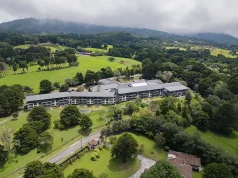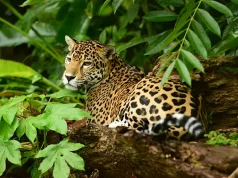

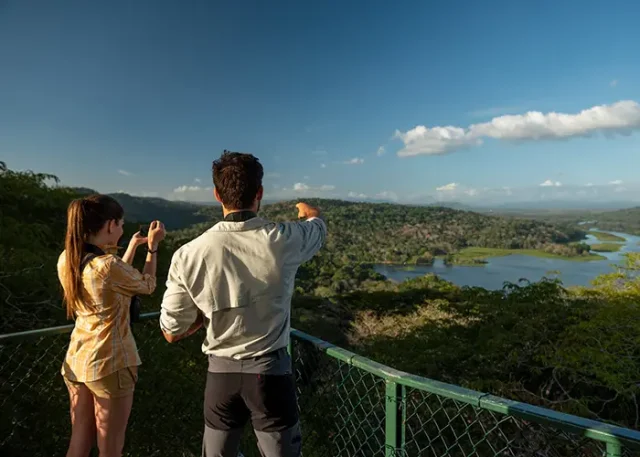
Linking North and South America while separating the Caribbean Sea from the Pacific Ocean, Panama occupies one of the most biologically diverse corners of the planet. Its rainforests, cloud forests, wetlands, islands and marine environments support an extraordinary variety of wildlife within a relatively compact destination.
Travelers can search for resplendent quetzals in the highlands, watch humpback whales breach along the Pacific coast and witness thousands of sea turtles arrive to nest on protected beaches. Panama City itself provides easy access to tropical forests, making wildlife watching possible without traveling far from the capital.
Here are three of the country’s most memorable nature experiences and the best places to find them.
Birdwatching from Panama City to the cloud forests
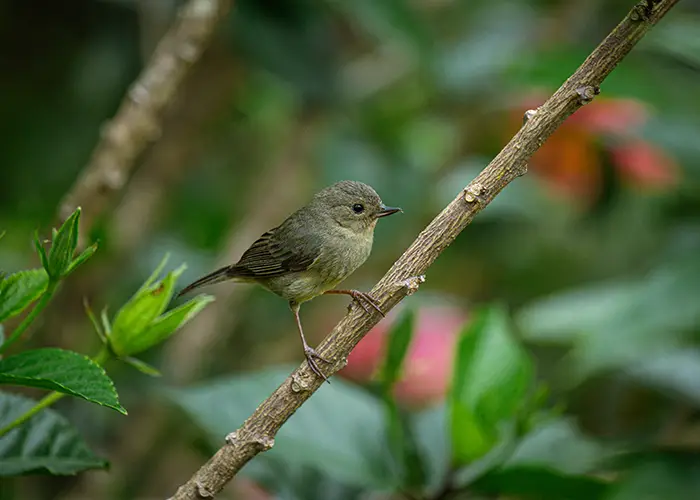
More than 1,000 bird species have been recorded in Panama, an impressive total for a country slightly smaller than South Carolina. Its position on a major migratory route also brings millions of birds across the isthmus as they travel between North and South America.
During Global Big Day 2025, birders in Panama recorded 771 species in 24 hours, placing the country among the world’s leading birdwatching destinations for the annual event.
Some of the most accessible birding begins in Panama City. Metropolitan Natural Park protects tropical forest within the capital and is home to toucans, motmots, parrots, raptors and numerous other species. Visitors may also encounter sloths, tamarins and white-tailed deer while walking its trails.
Approximately 45 minutes from the city, Soberanía National Park offers another exceptional birding environment. The park forms part of the Mesoamerican Biological Corridor and includes the celebrated Pipeline Road, where hundreds of bird species have been documented.
Observation towers and forest trails around the Panama Rainforest Discovery Center provide opportunities to look for hummingbirds, trogons, tanagers, toucans and canopy-dwelling species.
Searching for the resplendent quetzal
For one of Panama’s most coveted sightings, travelers can head west to the Chiriquí Highlands. The cool cloud forests surrounding Boquete, Tierras Altas and Volcán Barú National Park provide habitat for the resplendent quetzal.
Recognizable by its iridescent green plumage, red breast and exceptionally long tail feathers, the quetzal has held symbolic importance in Central American cultures for centuries. Early mornings generally provide the best chance of a sighting, particularly when accompanied by a local guide familiar with the bird’s feeding areas and calls.
Trails around Boquete and Volcán are also home to hummingbirds, warblers, flycatchers and other highland species. Coffee farms, mountain communities and cooler temperatures make it easy to combine birdwatching with culinary and cultural experiences.
DRIFT Travel’s guide to Panama’s Chiriquí Highlands offers more ideas for exploring this mountainous region.
More experienced wildlife travelers can consider Santa Fe National Park in Veraguas or the remote forests of Darién National Park. Darién is one of the most important wilderness areas in Central America and provides habitat for Panama’s national bird, the harpy eagle. Travel within the region requires advance planning and an experienced local operator.
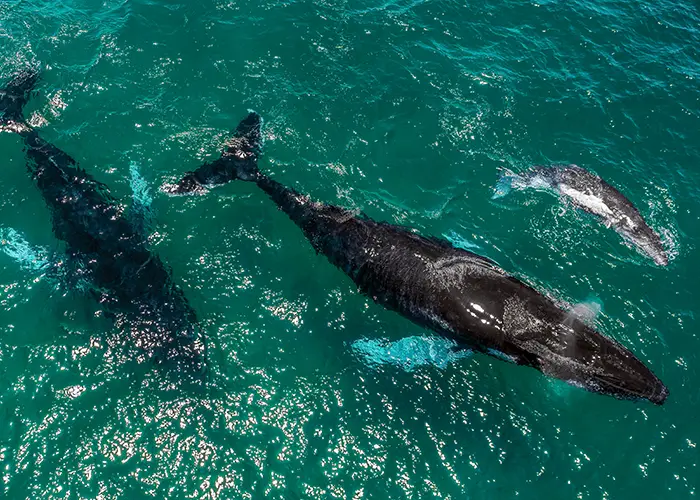
Two humpback whale migrations
Panama’s Pacific coast welcomes humpback whales from both the Southern and Northern hemispheres, creating two opportunities for whale watching during the year.
The largest and most dependable migration generally occurs from July through October, when whales arrive from feeding grounds in the Southern Hemisphere. A smaller northern migration can occur between January and March.
The whales come to Panama’s warm coastal waters to mate, give birth and care for their calves. Boat passengers may see whales surfacing, breaching, slapping their tails or swimming alongside young calves, although sightings and behaviors can never be guaranteed.
Popular whale-watching destinations include:
- The Pearl Islands and Taboga Island, accessible from Panama City
- The waters around Pedasí and Isla Iguana Wildlife Refuge
- Coiba National Park and the Pacific coast of Veraguas
- The Gulf of Chiriquí near Boca Chica
Smithsonian research identifies June through October as the principal season for humpback whales along Panama’s Pacific coast.
Responsible operators should maintain an appropriate distance, limit the time spent near the animals and avoid blocking their direction of travel. Boats should never chase whales or separate mothers from their calves.
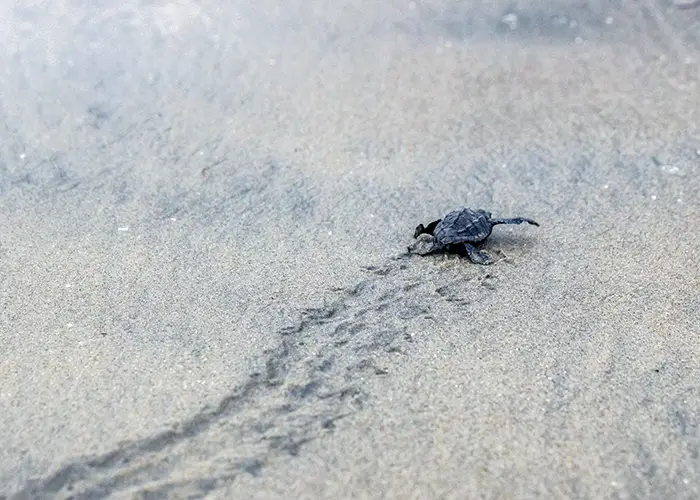
Sea turtle nesting on two coasts
Five of the world’s seven sea turtle species occur in Panama: olive ridley, hawksbill, leatherback, loggerhead and green turtles. Nesting takes place along both the Pacific and Caribbean coasts, although the season and species vary by location.
One of the most dramatic events is the arribada, or mass arrival, of olive ridley turtles. During these events, thousands of females emerge from the ocean over a relatively short period to lay their eggs.
Panama’s principal arribada locations are Isla Cañas Wildlife Refuge and Playa La Marinera, both in Los Santos Province. The main season extends from July through December, although olive ridley turtles may nest at other times of the year.
In September 2025, environmental authorities counted more than 20,000 olive ridley turtles during a single mass-nesting event at Playa La Marinera. Rangers monitor the beaches, protect nests and help reduce threats from poaching, predators, fishing equipment and artificial lighting.
Other important nesting areas include Coiba National Park, Punta Chame, Playa Malena, the Pearl Islands and San San Pond Sak in Bocas del Toro.
How to watch turtles responsibly
Nesting turtles and hatchlings are extremely sensitive to disturbance. Visitors should attend with an authorized guide or conservation organization and follow all instructions provided by park rangers.
During a nesting encounter:
- Remain quiet and keep a respectful distance.
- Do not stand directly in front of a turtle.
- Avoid flash photography and bright white lights.
- Never touch turtles, eggs or hatchlings.
- Do not place hatchlings in the ocean unless directed by trained conservation staff.
- Keep beaches free of litter and avoid leaving objects that could obstruct a turtle’s path.
Panama’s Ministry of Environment identifies Isla Cañas, Playa La Marinera, Armila, Punta Chame, La Barqueta and Las Lajas as strategically important nesting areas.
Planning a wildlife-focused trip
The best time to visit depends on the wildlife experience. Birdwatching is possible throughout the year, although migratory periods can bring additional species. Humpback whale sightings are most reliable during the July-to-October migration, while the principal olive ridley arribada season also runs from July into December.
A well-planned trip could combine several ecosystems. Travelers might begin with birding in Metropolitan Natural Park and Soberanía National Park, continue to the Chiriquí cloud forests and finish along the Pacific coast for whales or nesting turtles.
Wildlife sightings are never guaranteed, but traveling with trained local naturalists greatly improves the experience. Guides can locate animals without disturbing them, interpret behavior and explain how protected areas and surrounding communities contribute to conservation.
For a broader introduction to the destination’s forests, coastline and environmental diversity, readers can also explore how Panama shares its “Natural Normal” with travelers.
Panama’s biodiversity is impressive, but its accessibility is what makes the country especially compelling. In a single trip, travelers can move from an urban rainforest to misty mountain forests and protected Pacific islands—encountering some of Central America’s most remarkable wildlife along the way.