

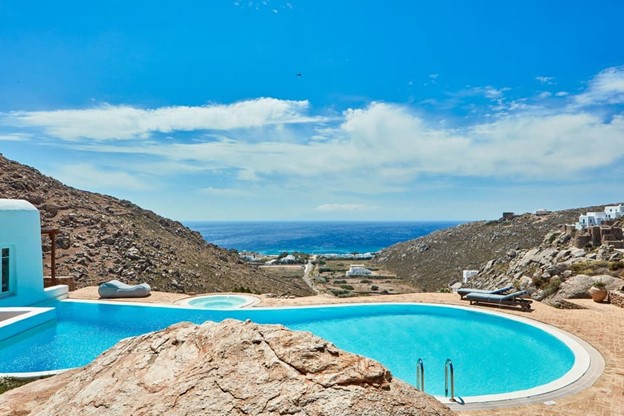
Few destinations lend themselves to villa living quite like Greece. Across its islands and mainland coast, travelers can find everything from whitewashed Cycladic houses overlooking the Aegean to stone residences surrounded by olive groves in the Peloponnese.
A villa can provide more privacy, space, and flexibility than a conventional hotel room, particularly for families, groups of friends, and couples planning an extended stay. It can also create opportunities to shop locally, prepare meals with Greek ingredients, and experience a destination at a more relaxed pace.
Villa rentals are not automatically the best choice for every vacation, however. Location, transportation, services, licensing, and additional fees all deserve careful attention. Here are five good reasons to consider a villa in Greece—and what to know before reserving one.
1. More Space and Privacy
Space is one of the clearest advantages of renting a villa. Instead of placing a family or group across several hotel rooms, everyone can share common areas while retaining separate bedrooms and bathrooms.
Private terraces, gardens, kitchens, living rooms, and pools create space for travelers to spend time together without feeling crowded. Parents may appreciate being able to put younger children to bed without ending the evening for everyone else. Groups of friends can gather for breakfast or sunset drinks without arranging to meet in a hotel lobby.
Privacy can be equally valuable for honeymooners and couples. A smaller villa with a secluded terrace or plunge pool offers a different experience from a busy resort, particularly on popular islands during the summer.
Not every property is completely private, though. Some pools, entrances, parking areas, or outdoor spaces may be shared with neighboring accommodations. Travelers should study photographs and property descriptions carefully and ask the host or rental company to clarify anything that is uncertain.
2. Greater Flexibility for Meals and Daily Schedules
Greek vacations often revolve around food, and a villa kitchen can make the experience even more enjoyable. Local markets, bakeries, produce stands, and small grocery stores provide the ingredients for leisurely breakfasts, casual lunches, and late-night snacks.
Self-catering does not mean preparing every meal. One of the pleasures of renting a villa is the ability to combine home-style meals with visits to neighborhood tavernas. Guests might have yogurt, fruit, bread, and honey on the terrace in the morning, spend the afternoon at the beach, and walk to a family-run restaurant for dinner.
Some upscale properties offer optional services such as grocery delivery, private chefs, housekeeping, or catered dinners. These arrangements can provide the comfort of a hotel with the privacy of a private residence. Confirm what is included in the rental price, as daily cleaning, breakfast, pool heating, and chef services may carry additional charges.
This flexibility is particularly helpful for families with young children, travelers with dietary requirements, and groups that do not want every day organized around restaurant reservations.
3. Better Value for Families and Groups
A villa may offer good value when its cost is divided among several travelers. A three- or four-bedroom property can sometimes compare favorably with booking multiple rooms at an upscale hotel, especially when guests can prepare some meals themselves.
The headline rental price does not tell the entire story, however. Travelers should account for cleaning fees, security deposits, local taxes, transportation, air conditioning, pool heating, and optional services.
Greece applies a Climate Crisis Resilience Fee to visitor accommodations, including short-term rentals and villas. The amount varies according to the property’s classification, size, and season. It may be collected separately rather than included in the advertised rate, so ask for a complete cost breakdown before booking.
Value also depends on how guests plan to spend their time. A villa with an elaborate kitchen, pool, and outdoor dining area makes sense if the group intends to use those features. Travelers who expect to spend every day sightseeing and every evening at restaurants may receive less benefit from paying for a large private property.
4. A More Relaxed Connection to the Destination
A villa encourages travelers to settle into a destination instead of simply passing through it. Shopping at the local market, learning the route to the nearest beach, and becoming familiar with a neighborhood café can make a vacation feel more personal.
This style of travel works especially well in Greece, where many communities are best appreciated slowly. Rather than trying to visit several islands in a week, guests can choose one base and explore its beaches, villages, archaeological sites, and walking trails.
Location shapes the experience. A villa outside a village may offer silence, open views, and exceptional sunsets but require a rental car. A property within walking distance of a town provides easier access to restaurants and shops but may have less privacy and more evening noise.
Ask for the property’s precise location before committing. Phrases such as “close to the beach” or “minutes from town” can be misleading when steep roads, limited sidewalks, or summer traffic are involved.
5. A Villa Can Be Tailored to Your Style of Vacation
Greece offers villa destinations for many different kinds of travelers. The right region depends on whether the priority is nightlife, beaches, history, food, hiking, or seclusion.
The Cyclades
Mykonos, Santorini, Paros, Naxos, Tinos, and neighboring islands are known for whitewashed architecture, dry landscapes, blue-domed churches, and expansive Aegean views.
Mykonos suits travelers interested in nightlife, beach clubs, and high-end dining. Santorini is a natural choice for romantic stays and caldera views, although privacy and vehicle access can be limited in cliffside villages. Paros and Naxos offer a broader mixture of beaches, villages, restaurants, and outdoor activities.
Crete
Crete is large enough to support a longer villa vacation without requiring island-hopping. Travelers can combine beaches with archaeological sites, mountain villages, hiking, wineries, and distinctive regional cuisine.
A rental car is useful for many Cretan villas, particularly those outside Chania, Rethymno, Heraklion, or Agios Nikolaos. Because distances can be greater than they appear on a map, select a base according to the attractions you most want to visit.
The Ionian Islands
Corfu, Kefalonia, and Zakynthos offer greener landscapes than the Cyclades, along with sheltered bays and architectural influences from centuries of Venetian rule.
Corfu has an especially wide selection of villas, from restored country houses to waterfront estates. Kefalonia appeals to travelers seeking dramatic scenery and a quieter atmosphere, while Zakynthos combines busy resort areas with more peaceful communities away from its nightlife centers.
The Peloponnese
Travelers do not need to board a ferry to enjoy a Greek villa vacation. The Peloponnese combines rugged coastlines, mountain scenery, archaeological landmarks, vineyards, and historic towns such as Nafplio and Monemvasia.
The region is particularly well suited to road trips. A villa can become a base for visiting ancient sites, beaches, and villages while avoiding the logistical complications of island transfers.
The Saronic Islands
Hydra, Spetses, Poros, and Aegina are relatively accessible from Athens, making them practical for travelers who want to combine a city stay with an island retreat.
Hydra is largely free of motor vehicles, so visitors should pay close attention to stairs and luggage arrangements. Spetses offers elegant architecture, beaches, and a relaxed social scene, while Aegina and Poros work well for shorter escapes.
What to Check Before Renting a Villa in Greece
A beautiful view should not be the only consideration. Before paying a deposit, confirm:
- The property’s official registration or tourism license number
- The precise location and realistic walking distances
- Whether a rental car is necessary
- Ferry or flight connections and arrival procedures
- Which bedrooms and bathrooms are fully enclosed
- Whether air conditioning serves every bedroom
- Whether the pool is private, heated, fenced, or seasonal
- Housekeeping frequency and linen changes
- Wi-Fi availability and expected reliability
- Accessibility, stairs, and steep paths
- Cancellation and refund conditions
- Security deposit requirements
- Cleaning charges and local accommodation fees
- Emergency and on-island contact information
Legitimate short-term rental listings in Greece should display an applicable property registration or tourism license number. If one is not shown, ask the owner or agency for it before booking.
It is also wise to pay through a reputable platform or established villa company. Be cautious if someone requests an unexpected bank transfer, changes the payment instructions at the last minute, or pressures you to communicate outside the booking platform.
When to Book a Greek Villa
July and August bring the greatest demand, the highest temperatures, and the busiest transportation schedules. Villas with private pools, several bedrooms, or direct beach access can sell well in advance.
May, June, September, and early October are often attractive alternatives. Temperatures are generally comfortable, many seasonal businesses remain open, and popular destinations can feel less crowded. Pool temperature and ferry frequency may vary during the shoulder season, so confirm both before booking.
Travelers tied to the peak summer period should reserve early and avoid making ferry connections too tight. Strong winds can occasionally disrupt island transportation, and leaving some flexibility between ferries and international flights is sensible.
Is a Greek Villa Right for You?
A villa is most rewarding for travelers who value privacy, space, flexible meals, and a slower connection to their destination. It can be an excellent choice for multigenerational families, groups, long-stay travelers, and couples seeking seclusion.
A hotel may be more suitable for a brief visit, a solo vacation, or travelers who prefer daily housekeeping, on-site restaurants, concierge assistance, and transportation within easy reach.
The key is choosing a property that fits the trip rather than selecting one solely for its photographs. When the location, services, and layout are right, a Greek villa becomes more than somewhere to sleep—it becomes an essential part of the vacation.
For help planning a broader journey, see DRIFT Travel’s 10-Day Greece Itinerary and its guide to the best European destinations for villa vacations.