Sherlock Holmes may be inseparable from foggy London streets and the fictional address of 221B Baker Street, but the origins of the celebrated detective can be traced north to Scotland.
Sir Arthur Conan Doyle was born in Edinburgh, studied medicine in the city and drew inspiration from one of its most observant surgeons. The atmosphere of Victorian Edinburgh—its medical institutions, graveyards, courtrooms and shadowy Old Town closes—also helped provide fertile ground for the stories that would eventually introduce Holmes and Dr. Watson to the world.
Today, visitors can follow Conan Doyle’s Edinburgh connections through a self-guided literary walk, visit the medical museum that helps explain Holmes’s deductive methods and explore a city that continues to celebrate storytelling.
Arthur Conan Doyle’s Edinburgh Beginnings
Arthur Ignatius Conan Doyle was born in Edinburgh on May 22, 1859. His birthplace stood at 11 Picardy Place, near the eastern end of the city’s Georgian New Town.
The original building no longer survives, but Picardy Place remains an appropriate starting point for exploring the author’s life. A bronze statue of Sherlock Holmes stands nearby, depicting the fictional detective in his familiar deerstalker with a pipe and cape.
The monument is dedicated not to a historical Edinburgh resident, but to a character whose roots are deeply connected to the city. From here, visitors can begin piecing together the experiences that influenced Conan Doyle’s most enduring creation.
Close to Picardy Place is St Mary’s Catholic Cathedral, where Conan Doyle was baptized. The surrounding streets have changed considerably since his childhood, but they still provide a sense of the New Town environment into which he was born.
The Real-Life Inspiration for Sherlock Holmes
The most important stop on any Sherlock Holmes journey through Edinburgh is the city’s historic medical quarter.
Conan Doyle attended the University of Edinburgh Medical School from 1876 to 1881. While studying there, he encountered Dr. Joseph Bell, a Scottish surgeon and lecturer known for his remarkable powers of observation.
Bell could reportedly study a patient’s appearance, speech, movements and clothing and use those details to draw conclusions about the person’s background, occupation and medical condition. His demonstrations showed students that careful observation could reveal information others overlooked.
Conan Doyle worked as Bell’s assistant and later acknowledged the surgeon’s influence on Sherlock Holmes. Bell’s method of observing small details and developing a logical conclusion became central to the fictional detective’s approach to solving crimes. The University of Edinburgh identifies Bell’s scientific methods and deductive abilities as a major influence on Holmes. University of Edinburgh
Visit Surgeons’ Hall Museums
Surgeons’ Hall Museums on Nicolson Street offers important context for understanding the medical world Conan Doyle entered as a student.
The museums are part of the Royal College of Surgeons of Edinburgh and explore the development of surgery, anatomy and pathology. Their collections help illustrate the scientific environment in which observation, evidence and detailed examination became increasingly important.
Some displays contain human remains and medical specimens, so the experience may not suit every visitor. For those interested in medical history, forensic science or the origins of Holmes’s investigative methods, however, Surgeons’ Hall is one of the most relevant stops in Edinburgh.
The surrounding area also places visitors close to the University of Edinburgh’s historic medical buildings and the locations associated with Conan Doyle’s education.
Edinburgh’s Old Town and the Atmosphere of Mystery
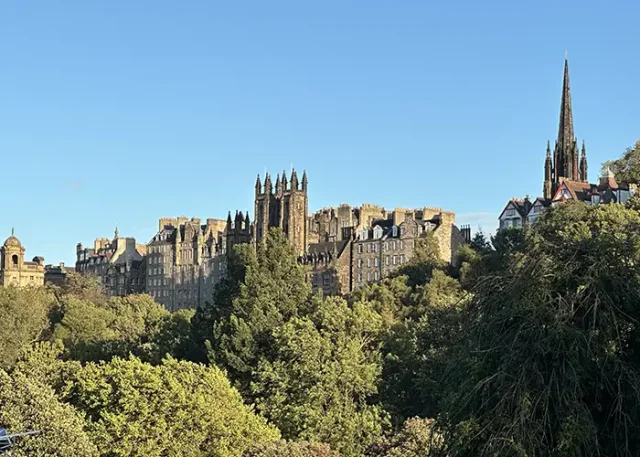
Although the Sherlock Holmes stories are primarily set in London, Edinburgh’s Old Town possesses many of the atmospheric qualities readers associate with Conan Doyle’s mysteries.
The narrow closes branching from the Royal Mile, dark stone buildings and hidden courtyards create a dramatic setting for walking. During Conan Doyle’s lifetime, Edinburgh was a city of striking contrasts. The orderly Georgian streets of the New Town stood across from the densely built Old Town, where overcrowding, poverty and crime were persistent concerns.

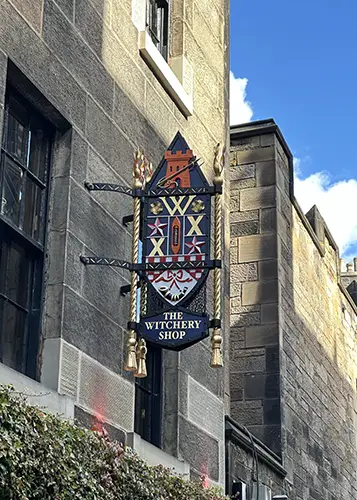
Its long history of medical research, criminal trials and public fascination with anatomy also influenced the city’s darker reputation. Stories of grave robbers and the crimes of Burke and Hare were already embedded in Edinburgh’s history by the time Conan Doyle began studying medicine.
Modern visitors can explore preserved underground spaces, take a historical walking tour or simply wander through the Old Town while imagining how Victorian Edinburgh might have looked to a young medical student with literary ambitions.
Greyfriars Kirkyard
Greyfriars Kirkyard is another atmospheric stop on a Conan Doyle-themed walk.
The historic cemetery is best known to many visitors for Greyfriars Bobby, but it also reflects Edinburgh’s complicated medical and social history. During the 18th and early 19th centuries, the demand for bodies for anatomical study contributed to grave robbing around the city.
Dr. Joseph Bell was buried at Dean Cemetery rather than Greyfriars, but Greyfriars provides valuable context for the world of anatomy, crime and public anxiety that surrounded Edinburgh’s medical institutions.
It is also a peaceful place to slow down and appreciate the city’s layers of history. Visitors should remember that Greyfriars remains a burial ground and treat it respectfully rather than approaching it merely as a spooky attraction.
The Conan Doyle Pub
Near Picardy Place, The Conan Doyle pub provides an informal stop connected to the author’s legacy.
Located on York Place, the pub is close to where Conan Doyle was born and contains decorative references to Sherlock Holmes and his creator. It can be incorporated at the beginning or end of a walking route through the city.
Names, menus and opening arrangements can change, so visitors should confirm current information before making a special trip.
Edinburgh’s Wider Literary Heritage
Conan Doyle is only one part of Edinburgh’s remarkable literary story. The city has connections to Sir Walter Scott, Robert Louis Stevenson, Robert Burns, Muriel Spark, Ian Rankin, Alexander McCall Smith and many other writers.
Edinburgh became the world’s first UNESCO City of Literature in 2004. Its publishing history, libraries, bookshops, literary festivals and writers’ landmarks make it an appealing destination even for visitors with only a passing interest in Sherlock Holmes.
The Writers’ Museum, located in Lady Stair’s Close, concentrates on Burns, Scott and Stevenson. While it does not focus on Conan Doyle, it expands the literary itinerary and provides a deeper understanding of Scotland’s influence on English-language literature.
Crime-fiction readers may also recognize Edinburgh as the setting for Ian Rankin’s Inspector Rebus novels. The connection creates an interesting bridge between Conan Doyle’s Victorian detective and Scotland’s modern tradition of crime writing.
Take a Sherlock Holmes Walking Tour
Guided and self-guided Sherlock Holmes experiences continue to operate in Edinburgh. Some focus specifically on Conan Doyle and Joseph Bell, while others combine literary history with stories of Victorian crime, medicine and the city’s darker past.
Current tours may include Picardy Place, the Sherlock Holmes statue, the Old Town, Greyfriars Kirkyard and locations associated with the University of Edinburgh. Some also use puzzles and deduction challenges inspired by Holmes.
Because tour schedules and operators change, visitors should confirm availability through the operator or an official tourism source before arriving. VisitScotland currently lists Sherlock Holmes-themed walking tours and outdoor puzzle experiences in Edinburgh. VisitScotland
A Suggested Sherlock Holmes Walking Route
A self-guided route can be completed in several hours, although museum visits will add considerably more time.
Begin at the Sherlock Holmes statue in Picardy Place and walk past the site of Conan Doyle’s birthplace. Continue along York Place to see The Conan Doyle pub before heading toward Edinburgh’s Old Town.
From there, walk to the University of Edinburgh area and visit Surgeons’ Hall Museums. Continue toward Greyfriars Kirkyard, then explore the closes and courtyards around the Royal Mile.
The route can end at the Writers’ Museum in Lady Stair’s Close or continue toward Edinburgh Castle for broader city history and views across the capital.
Planning a Literary Visit to Edinburgh
Edinburgh is compact enough to explore on foot, but its steep streets, stone steps and cobbled surfaces require comfortable footwear. Rain is possible throughout the year, making a waterproof jacket useful even when the forecast appears promising.
Surgeons’ Hall Museums and other indoor attractions may have changing hours or timed admission. Check opening information before finalizing the day’s route.
Visitors planning to see Edinburgh Castle should reserve more time and consider booking ahead during busy periods. A two- or three-night stay provides enough time to explore the Sherlock Holmes connections while also visiting the Royal Mile, National Museum of Scotland, Calton Hill and other major attractions.
Visitors planning a longer journey can also explore DRIFT Travel’s guide to new culture and heritage trips through Scotland, England and Ireland.
Scotland’s Lasting Influence on Sherlock Holmes
London provided Sherlock Holmes with his most famous address, but Edinburgh helped provide the character with his mind.
Conan Doyle’s medical education, his encounters with Joseph Bell and the scientific culture of Victorian Edinburgh all contributed to the detective’s distinctive approach. The city’s architecture, burial grounds and shadowed closes add another layer of atmosphere for readers who want to understand the world in which Holmes was imagined.
Following these clues through Edinburgh reveals more than the history of a fictional detective. It tells the story of how a Scottish medical student transformed lessons in observation into one of literature’s most recognizable characters.