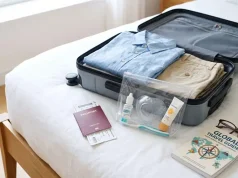

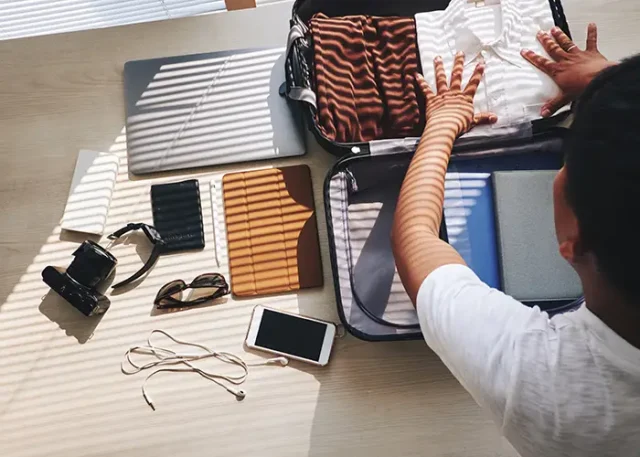
Frequent travelers know the feeling well. You check into a perfectly appointed hotel room, climb into a bed that looks objectively comfortable, and then spend three hours staring at the ceiling. Something is always slightly off: the room temperature, the pillow height, the quality of darkness, the unfamiliar sounds outside. Hotels have gotten better at engineering sleep environments, but they can only do so much. The rest is down to what you bring.
Packing deliberately for rest and comfort, rather than just for the activities on your itinerary, is one of the habits that separates seasoned travelers from those who consistently arrive at their destinations feeling worse than when they left. Here is what actually belongs in the bag.
Sleepwear That Works Across Climates
Most people treat sleepwear as an afterthought when packing, grabbing whatever is clean and takes up the least space. The problem is that hotel rooms vary enormously in temperature, and a fabric that works in your bedroom at home can become genuinely disruptive in a warmer or more humid environment.
The key property to look for is moisture management. Fabrics that wick sweat away from the skin and allow heat to disperse support the body’s natural temperature drop during sleep onset. Those that trap warmth and hold moisture against the skin work against that process, often without you fully registering why you slept so lightly.
Moisture-wicking and temperature-regulating sleepwear has become the choice of experienced travelers for exactly this reason. Cool Jams specializes in sleepwear engineered around this principle, with fabrics designed to keep you comfortable across the kind of temperature variation that multi-destination travel typically involves. It packs well, washes easily, and performs in climates where standard cotton falls short.
For cooler destinations, lightweight merino wool is worth considering. It regulates in both directions, providing warmth without overheating, and has the practical advantage of resisting odor through multiple wears.
The Sleep Kit
Beyond what you wear, a small sleep kit can be the difference between a genuinely restorative night and a functional one. These items take minimal space and pay for themselves on the first use.
A good sleep mask is the most valuable piece. Hotel blackout curtains are inconsistent, and light from corridor gaps, charging indicators, and the glow of city skylines through imperfect window seals can interrupt sleep at a neurological level even when you are not consciously aware of them. A contoured mask that sits away from the eyes rather than pressing directly on them is worth the modest extra cost.
Earplugs or a white noise app address the sound variable. Hotel corridors, adjacent rooms, air conditioning units that cycle noisily, and urban soundscapes all behave differently than your home environment. A consistent background sound masks the unpredictable spikes that pull you out of lighter sleep stages.
A travel-sized pillow spray with lavender is worth the few milliliters it takes up. Familiar scent has a measurable effect on sleep environment comfort, particularly when everything else around you is unfamiliar.
Skincare for Changing Environments
Air travel and hotel environments are both genuinely drying. Recirculated cabin air pulls moisture from skin with efficiency, and hotel heating and cooling systems continue the work on arrival. A skincare routine that holds up across these conditions needs to be more focused on hydration than your usual routine at home.
The essentials are a gentle cleanser, a reliable moisturizer with some barrier support, and a face oil or balm for the nights when the room is particularly dry. Decanting into small travel containers keeps weight down without sacrificing the products you actually trust.
Travel-sized versions of your regular products are useful for short trips, but for longer travel or multiple destinations, carrying the actual products you know work for your skin is worth the extra weight. Hotel-provided toiletries are inconsistent and frequently contain fragrances that irritate skin that is already under stress from travel.
A lip balm and hand cream complete the picture. Both are areas where dehydration becomes obvious quickly and where the fix is straightforward.
The Comfort Layer
A lightweight travel blanket or a large scarf that doubles as one solves a problem that hotel rooms create regularly: the temperature being set perfectly for sleep while the bedding is either too heavy or too thin for your preferences. Having something you can add or remove without fully waking up maintains sleep continuity in a way that wrestling with hotel duvets does not.
A travel adaptor with USB ports belongs in every bag. The stress of arriving at a hotel with a flat phone or device that needs charging before morning, and finding no compatible sockets near the bed, is minor but entirely avoidable.
Why This Matters More Than It Sounds
The Sleep Foundation notes that travel disrupts sleep through a combination of environmental factors, schedule changes, and the body’s natural adjustment to unfamiliar settings. Their guidance consistently points to controlling the variables within your reach, since the ones outside it, room acoustics, bed firmness, climate, are largely fixed once you have checked in.
Packing a considered sleep and comfort kit is not indulgence. For travelers whose performance the following day depends on arriving rested, it is straightforward preparation. The items are small, the weight is manageable, and the return shows up in how you actually feel when the trip matters most.