
The Scale of What Is There
The Aegean contains somewhere between 1,200 and 6,000 islands depending on how you count them, and the uncertainty in that figure is itself revealing. Nobody has agreed on a number because many of them are rocks that become islands at low tide, or uninhabited outcrops that appear on no map, or places so small that visiting them requires knowing they exist in the first place. The effect of this scale on the repeat visitor is simple: there is always somewhere new to go. A lifetime of annual trips to the Aegean would not exhaust its geography, and the awareness of this inexhaustibility is a significant part of what draws people back.
The islands that most visitors know — Santorini, Mykonos, Rhodes — represent a fraction of what is available, and experienced Aegean travellers tend to move steadily away from these towards the less visited archipelagos as their knowledge of the sea deepens. The Dodecanese, the northern Aegean islands, the Sporades, the remote eastern islands close to the Turkish coast — each group has a distinct character, a different history, a different relationship between the land and the water that surrounds it.
The Light
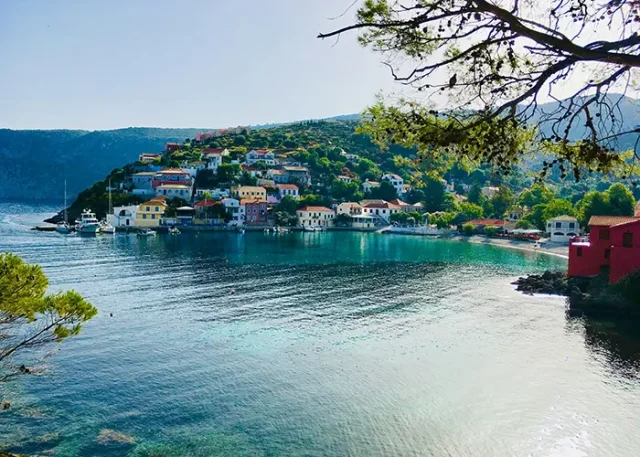
The light of the Aegean is the thing that most visitors mention first and find hardest to explain to anyone who has not seen it. It is not simply brightness — the Mediterranean is bright in many places — but a particular quality of clarity that makes distances seem shorter and colours more saturated than the eye is accustomed to. The white walls of a village on a hillside above a blue harbour. The shadow of a boat on the seabed in twelve metres of water. The way the islands appear on the horizon an hour before you reach them, sharp-edged and specific, as though the air between here and there contains nothing at all.
Painters have been trying to capture this light for centuries without fully succeeding, which is itself a measure of its quality. It is the kind of light that makes you feel more awake than usual, and its absence, on returning home to northern latitudes, is one of the more concrete things that draws people back.
“The Aegean light is the thing you miss most when you leave and the first thing you notice when you return. Nothing else quite prepares you for it.”
Why a Boat Is the Only Way to Experience It Properly
The Aegean is a sea, and it rewards travellers who treat it as one rather than as a backdrop for land-based holidays. The islands that are most worth visiting are not always the ones with airports, and the experience of moving between them by water — watching one island recede as the next appears, anchoring in bays that have no road access, arriving somewhere in the early morning with the light just coming up over the hills — is fundamentally different from arriving by ferry or plane.
A yacht charter Greece provides the most complete version of this experience — the freedom to move on a schedule determined by wind and inclination rather than ferry timetables, the ability to reach anchorages that larger vessels cannot enter, and the particular quality of life aboard a well-found boat that turns the journey itself into as much of the experience as the destinations along the way. The repeat visitors who know the Aegean best almost all sail it, and most of them will tell you that the first sailing trip was the one that made everything else feel like a preliminary.
What Keeps Bringing People Back
Beyond the geography and the light, the Aegean produces loyalty for reasons that are harder to categorise. The food, which varies significantly between island groups and rewards genuine curiosity. The hospitality, which in the less visited islands retains a quality that feels personal rather than professional. The pace of life in small island communities, which has resisted the acceleration that has transformed larger resorts and produces, in visitors who stay long enough to feel it, a recalibration of what a reasonable speed for daily life actually is.
All of these things together produce a destination that is not simply pleasant to visit but genuinely difficult to leave — and, once left, consistently present in the imagination in a way that most places are not. The Aegean occupies a disproportionate share of the mental space of the people who know it, and that occupation tends to resolve, year after year, in the same direction: back to the boat, back to the water, back to the light.