

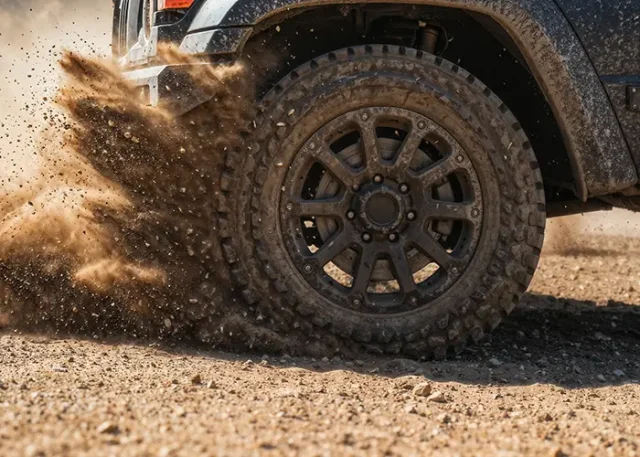
When it comes to off-road builds, tires are often treated as an afterthought compared to suspension, gearing, or drivetrain upgrades. In reality, tire choice plays one of the biggest roles in how a vehicle performs once it leaves pavement. The right tires can dramatically improve traction, control, and confidence, while the wrong setup can limit capability even on a well-built rig. Choosing tires that work with your vehicle, terrain, and wheel setup—such as properly sized 4×4 wheels—can completely change how your off-road vehicle behaves in real-world conditions.
Matching Tire Type to Terrain and Driving Habits
Not all off-road tires are designed for the same purpose, and assuming one tire fits every situation is a common mistake. Tire tread patterns, rubber compounds, and sidewall designs are all engineered with specific terrain in mind. Understanding where and how you drive most often should guide your tire selection.
Mud-terrain tires are built for aggressive traction in deep mud, loose soil, and rocky conditions. Their large tread blocks and wide voids help clear debris quickly, but they can feel noisy and stiff on pavement. All-terrain tires offer a more balanced option, delivering respectable off-road grip while maintaining smoother on-road manners for daily driving.
Terrain type matters just as much as tread style. Sand requires flotation, which means wider tires with less aggressive tread. Rocky trails demand strong sidewalls and flexible tread blocks that can grip uneven surfaces. Snow and slick conditions benefit from siping and rubber compounds that stay pliable in cold temperatures.
Driving habits also influence tire performance. A weekend trail rig that sees occasional highway use can afford a more aggressive tire than a daily driver that racks up highway miles. Overlanding setups often prioritize durability and ride comfort, while rock crawlers focus on maximum traction at low speeds.
Wheel size plays a role in how tires perform as well. Many off-road enthusiasts prefer 17 inch truck wheels because they strike a balance between brake clearance and sidewall height. More sidewall allows better flex when airing down, improving traction and ride quality on uneven terrain.
Why Load Ratings and Construction Matter Off Road
Beyond tread pattern, tire construction has a major impact on off-road capability and durability. Load rating, ply count, and sidewall strength all determine how well a tire handles weight, impacts, and pressure changes during off-road use.
Load ratings indicate how much weight a tire can safely carry, but they also affect stiffness. Tires with higher load ratings often have stronger construction, which can be beneficial for heavier vehicles, towing setups, or rigs carrying extra gear. However, overly stiff tires can reduce ride comfort and limit flex on lighter vehicles.
Sidewall construction is especially important off road. Reinforced sidewalls help prevent punctures from rocks, roots, and trail debris. They also improve stability when airing down for traction. Tires with weak sidewalls may perform well on mild trails but become vulnerable in technical terrain.
Airing down is a key off-road technique, and tire construction determines how safely and effectively you can do it. Strong bead retention and flexible sidewalls allow tires to conform to obstacles without losing pressure or unseating from the wheel. This is where quality construction makes a noticeable difference in control and confidence.
Tire weight is another often-overlooked factor. Heavier tires can improve durability but add rotational mass, which affects acceleration, braking, and fuel economy. Choosing a tire that balances strength with manageable weight helps maintain overall vehicle performance.
It’s also important to match tires to your wheel setup. Proper tire sizing ensures correct fitment, maintains steering geometry, and prevents rubbing issues. When paired with the right wheels and suspension setup, high-quality off road tires allow your vehicle to perform as intended across a wide range of trail conditions.
Conclusion
Tire choice has a far greater impact on off-road performance than many drivers realize. From tread design and terrain compatibility to load ratings and construction strength, every detail influences how your vehicle handles challenging conditions. Matching your tires to your driving habits, terrain, and wheel setup ensures better traction, durability, and overall control on the trail. By choosing the right tires from the start, you unlock more capability from your vehicle and gain confidence every time the pavement ends.