
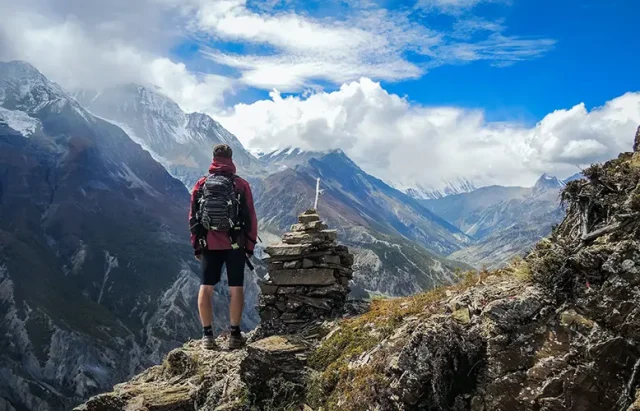
Standing on a summit before sunrise has mystical qualities to it.
The sky fades from navy to baby pink. Blankets of clouds unroll beneath you like cotton candy waves. And for a moment… all those sore muscles and wake-up calls feel so totally worth it.
That is what makes a first-light hike so special. And if you’re going to take on a multi-day trekking adventure, chasing sunrise above the clouds is one of those memories you’ll take with you forever.
Here’s why it’s worth every single step…
In this guide:
- Why Sunrise Hikes Hit Different
- The Best First-Light Trekking Destinations
- How to Prepare for a Multi-Day Trekking Adventure
- Common Mistakes That Ruin Sunrise Hikes
- Safety Tips for Trekking Before Dawn
Why Sunrise Hikes Hit Different
Most of us watch the sunrise through the window of a coffee shop. Sunrise hikers watch it from where few others stand.
Here’s why that matters:
Dawn light is softer, warmer and more dramatic than any other time of day. The mountains are illuminated with colours that you won’t see later in the day. Wildlife is more abundant. Even the trails are quieter. And the views? They’re often spectacular because there is less haze.
It feels great to earn a view that almost no one else will ever see.
And there’s a deeper reason people are chasing these experiences…
Outdoor recreation is booming globally. The Outdoor Industry Association reports 63 million people now hike recreationally in the U.S. alone. That’s more people than participate in any other outdoor activity. Travelers are craving adventures with purpose. First-light hikes offer that in a way few other experiences can.
The Best First-Light Trekking Destinations
Dreaming of chasing your own sunrise above the clouds? Well then, you’ll want to choose your trail wisely. Not all multi-day trekking routes culminate in that iconic above-the-clouds experience – some are practically designed for it.
Here are a few of the best:
Inca Trail, Peru
This is the big one.
It is possible to hike the Inca Trail to Machu Picchu in 4 days through cloud forest, along ancient stone trails, and over breathtaking mountain passes. However, you save the best for the last…watching the sun rise over Machu Picchu from the Sun Gate is something travelers remember for lifetimes.
Mount Kilimanjaro, Tanzania
Mount Kilimanjaro. Africa’s tallest mountain. The final ascent to the summit is intentionally made in darkness – so climbers reach Uhuru Peak as the sun is rising over the African savannah.
Everest Base Camp, Nepal
The popular viewpoint at Kala Patthar. Backpackers wake up at 4am to see sunrise hit Everest in golds and pinks that are unreal for pictures.
Mount Fuji, Japan
The Japanese call it Goraikō — “arrival of light.” Climbers summit in the dark, reaching the top as dawn spills over the Pacific.
Each one is brutal. Each one is worth it.
How to Prepare for a Multi-Day Trekking Adventure
You can’t just show up & expect to kill it on a multi-day trekking adventure. Trekking is serious business.
Listen…..Most people don’t realize how hard it actually is. They plan on running the distance but they don’t account for altitude or cold or poor sleep. That makes for a miserable trip.
To get yourself ready, focus on:
- Cardio fitness – long walks, hill repeats, and stair climbs
- Leg strength – lunges, squats, and step-ups with a loaded pack
- Altitude prep – if possible, train at elevation
- Pack practice – wear your boots and carry your pack on training hikes
Don’t forget your gear either. Bad gear cuts more sunrise hikes short than bad weather.
A solid kit looks like this:
- Broken-in hiking boots (never new ones)
- A warm headlamp with spare batteries
- Layered clothing – base, mid, shell
- A daypack with a built-in rain cover
- Trekking poles for descents
- Snacks with serious calorie density
Talking calories… A thru hiker can burn as many as 6,000 calories a day on strenuous trails such as the Appalachian. Food is not a luxury. It’s fuel. Bring twice as much as you think you’ll need.
Common Mistakes That Ruin Sunrise Hikes
Sunrise hikes look easy on Instagram. They are not.
Here are the biggest mistakes trekkers make – and how to dodge them.
Starting Too Late
The number one rookie error.
Arrive at the viewpoint BEFORE sunrise begins. Not “near sunrise.” Before. Give yourself extra time in case you’re moving slowly, get lost, or stop for breaks.
Underestimating the Cold
It’s always colder at altitude. Always.
It is coldest during pre-dawn hours. Winds during exposed ridge situations can feel ten degrees colder. Bring layers you don’t think you’ll need.
Skipping the Headlamp
Phone torches burn out. Headlamps don’t. Buy yourself a proper one, and always carry spares batteries away from camp.
Going Too Fast
Sunrise hikes always feel rushed. When you rush, you’re more likely to get hurt. Tripping and falling is how most injuries occur on the trail.
Slow down. The view will still be there.
Safety Tips for Trekking Before Dawn
The predawn hours are gorgeous. Unfortunately they are also when most trail accidents occur – low visibility, cold muscles, tired hikers do not mix well.
Stay safe by following these rules:
- Always tell someone your route and expected return time
- Hike in a group when possible
- Stick to marked trails, especially in the dark
- Check the weather forecast religiously
- Know the signs of altitude sickness
Interest in trekking is booming. Each year more people set foot on the trail than ever before. Trails are getting crowded. Rescue capacity is being maxed out. Personal responsibility has never been more important.
If you are going somewhere remote, research satellite communicators as well. Renting one inexpensively could be worth it on a life or death trail.
Hike smart. Come home with stories instead of scars.
Final Thoughts
Sunrise above the clouds isn’t simply beautiful. It’s earned. Reward for early mornings, burning legs, and shivering on top.
A properly organized, multi-day trekking journey transforms your worldview. The trails. The folks you meet along the way. Waking up at home afterward with a clear understanding of what’s possible when you go after it.
Okay, tie on the boots. Throw the headlamp in. Set the alarm for earlier than you think makes sense.
Then go find that first light.
It’s worth every step.