
There’s a reason 30A became a phenomenon. That stretch of the Florida Panhandle — Seaside, Rosemary Beach, Alys Beach, and their neighbors — perfected a certain kind of beach town: walkable, design-forward, low on traffic and high on charm, where pastel cottages cluster around a town green and you can bike to coffee in the morning and dinner at night. The catch is that 30A is no longer a secret, and the prices and crowds reflect it.
The good news? That walkable, planned-but-laid-back beach-town feeling exists in other corners of the country, often for a fraction of the attention. Some were literally designed using the same New Urbanist playbook that created Seaside; others just happen to share the same easygoing, car-optional soul. Here are the lesser-known beach towns that scratch the 30A itch.
1. Cinnamon Shore — Mustang Island, Texas
If any place deserves the title of “Texas 30A,” it’s Cinnamon Shore. Built on Mustang Island just outside Port Aransas, this master-planned beachfront community draws directly from the same New Urbanist design philosophy that shaped Seaside — colorful coastal homes gathered around a walkable town center, with pools, a coffee shop, restaurants, and a market all a short stroll from a wide stretch of Gulf beach.
The whole place is engineered around the same idea that makes 30A so beloved: you park the car once and live on foot or by bike for the rest of the trip. Kids ride to the ice cream shop, parents walk to dinner, and the beach is always just past the dunes. It has the design sensibility and the community feel of its Florida cousin, but with Texas friendliness and far smaller crowds. If you want to experience it for yourself, Beached Inn puts you right in the heart of the community, steps from the sand.
2. Seabrook — Washington
Proof that the 30A formula travels well beyond the Gulf, Seabrook sits on Washington’s wild Pacific coast and was explicitly built in the New Urbanist tradition. Shingled cottages, white picket fences, and a compact town center give it an almost storybook quality, while the moody, dramatic Olympic Peninsula coastline gives it a character all its own. It’s misty and pine-scented rather than sunny and tropical, but the walkable, intentional design will feel instantly familiar to any 30A fan.
3. Cape Charles — Virginia
On Virginia’s quiet Eastern Shore, Cape Charles is a former railroad town that’s been quietly reinventing itself into one of the East Coast’s most charming small beach towns. Its tidy grid of streets leads down to a calm Chesapeake Bay beach famous for spectacular sunsets, and the walkable historic downtown is filling up with cafes, breweries, and galleries. It still flies well under the radar, which is exactly the appeal.
4. Beachtown — Galveston, Texas
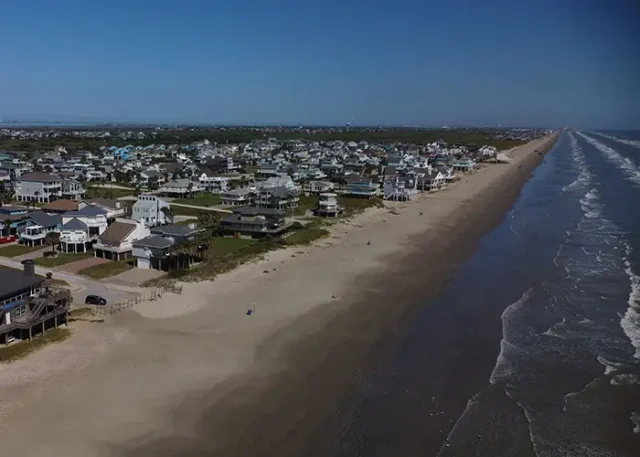
Tucked on the east end of Galveston Island, Beachtown is a New Urbanist neighborhood designed in the Seaside mold, complete with brightly colored homes, narrow walkable lanes, and dune-side cottages. It offers the planned-beach-town aesthetic within easy reach of Houston, blending the charm of a designed community with Galveston’s deep coastal history just down the road.
5. Cannon Beach — Oregon
Cannon Beach trades pastels for evergreens, but it nails the small, walkable, artistic beach-town vibe. The compact downtown is full of galleries, bakeries, and independent shops, and the whole place is anchored by the iconic Haystack Rock rising from the surf. It’s the Pacific Northwest’s answer to the charming, unhurried coastal town — less sunbathing, more sweater weather and tide pools, but every bit as soulful.
6. Ocean Springs — Mississippi
Often overlooked in favor of flashier Gulf destinations, Ocean Springs is an artsy, oak-shaded town with a genuinely walkable downtown packed with galleries, restaurants, and local shops. Its creative spirit — rooted in the legacy of artist Walter Anderson — gives it a personality that the bigger resort towns lack. The beaches are calm and family-friendly, and the town itself feels like a well-kept secret.
7. Bald Head Island — North Carolina
For a true escape, Bald Head Island bans cars entirely — everyone gets around by golf cart, bike, or on foot. Reached only by ferry, this maritime-forest island off the North Carolina coast pairs upscale, easygoing charm with genuine seclusion. The car-free, slow-paced lifestyle captures the best part of 30A’s appeal and turns it all the way up.
8. Port St. Joe and Cape San Blas — Florida
Just down the coast from 30A lies Florida’s “Forgotten Coast,” and it feels like what 30A was a few decades ago. Port St. Joe is a laid-back fishing town with a revitalized main street, while nearby Cape San Blas offers some of the most pristine, uncrowded beaches in the state. Same Gulf water, same sugar-white sand, a fraction of the crowds — for travelers who want the 30A landscape without the 30A scene, this is the move.
9. Fairhope — Alabama
Perched on a bluff over Mobile Bay, Fairhope isn’t an open-ocean beach town, but it more than earns a spot for sheer charm. Flower-lined streets, a famously walkable downtown full of bookshops and cafes, and a long pier stretching out over the bay give it a refined, artsy character. The sunsets over the water are the stuff of legend, and the town’s slow, cultured pace will resonate with anyone drawn to 30A’s quieter corners.
Finding your own 30A
What makes 30A special was never really the sand — plenty of places have great beaches. It’s the feeling: a walkable town built at human scale, where the car stays parked and the days unfold slowly. The towns above capture that spirit without the price tag or the crowds, scattered from the Pacific Northwest to the Texas Gulf to the Chesapeake Bay.
So next time the famous spots feel too discovered, point yourself toward one of these. Half the joy is finding the version of 30A that feels like yours.