
The first thing you learn about traveling Egypt with children is that the pharaohs did not plan for naptimes.
The second is that the country’s greatest sights sit far apart, the sun is strong, and a seven-year-old’s patience has a shorter shelf life than a bottle of sunscreen. Egypt is worth the effort. How you structure the trip decides whether your family comes home glowing or limping.
After years of covering family travel, I’ve come to a firm conclusion. For most families, a luxury Nile cruise is the better way to see Egypt than a conventional land tour.
The Land Tour Problem Nobody Mentions in the Brochure
On paper, a classic land tour looks efficient. Cairo, Luxor, Aswan, perhaps a detour to Abu Simbel, all in one itinerary.
In practice, it looks like this.
You wake at 5:30 to beat the heat. You pack the suitcases, which means finding the one sock that migrated under the bed. You load the van and sit in traffic. You check in somewhere new and unpack just enough to find the swimsuits. Two days later, you do it all again.
Do that four or five times in a week, and the packing becomes the main event. Children don’t tolerate it well, and neither do the adults.
The real cost is energy. Kids who spend half the day in transit arrive at the temple already spent. They wilt in the heat, the guide’s voice turns to background noise, and the afternoon sinks into negotiations over snacks.
Parents know this arc. You pay a premium to bring your family to the Valley of the Kings, and your daughter spends it asking when lunch is.
Unpack Once, See Everything
A Nile cruise removes the problem rather than managing it.
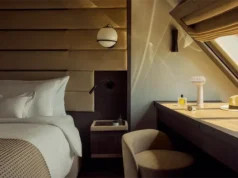
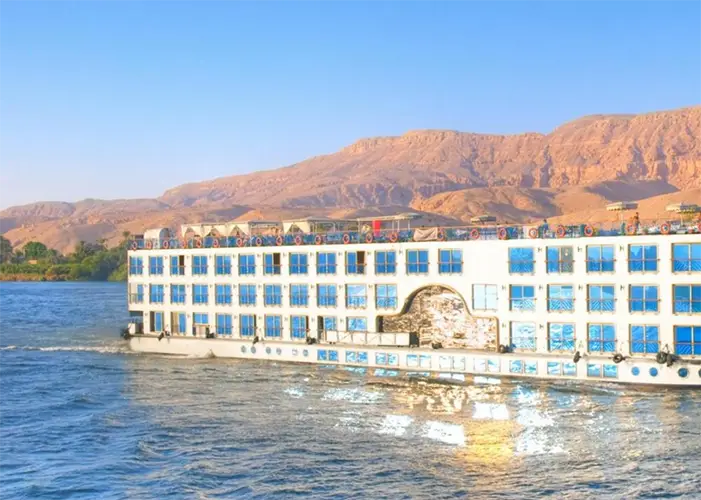
You unpack on the first day. Your cabin becomes home base, and the hotel moves with you. While the children eat breakfast, the ship slips toward the next temple. While they nap, it covers the distance that a land tour would spend on a hot, loud highway.
For parents, this changes the whole feel of the trip. You stop being a logistics manager and start being a traveler again. If you want to pack light and carry only what you need, a cruise is the easiest format to do it in, because you only pack and unpack once.
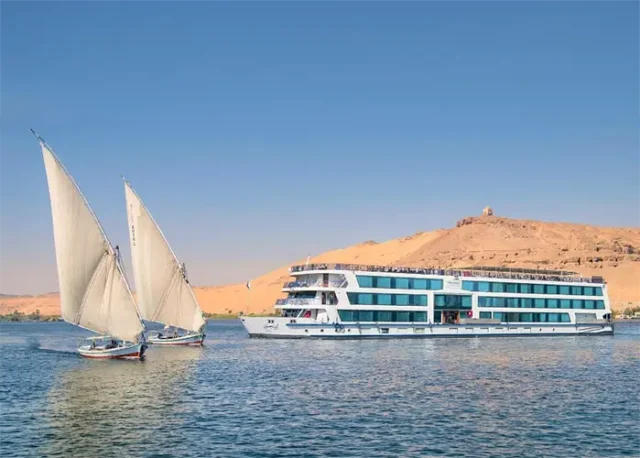
The river does the driving. On a 5 days nile cruise from Luxor, you settle into your cabin on day one, then sail through Edfu and Kom Ombo to Aswan without opening a suitcase again. Your job is to look out the window.
The Pool: Your Secret Weapon Between Temples
Anyone who has toured ruins in the Egyptian sun knows the middle of the day is the hard part. Between about 11 a.m. and 3 p.m., the stone radiates heat and the shade shrinks to a few feet of wall.
On a land tour, this is when children fall apart. You’re far from the hotel, so you sit in a café nursing lukewarm drinks and hoping for a second wind.
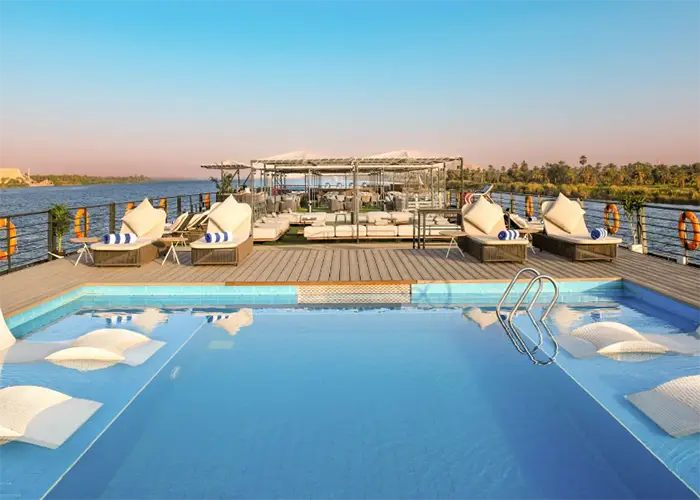
On a cruise, you walk back up the gangway. By noon, the kids are in the pool. By one, they’re eating lunch with wet hair and sunburned noses, happy. By four, they’re ready to see Karnak at golden hour, when the light turns the columns the color of honey and the crowds thin out.
That rhythm of morning sightseeing, midday pool, and late-afternoon temple is the single biggest advantage the cruise has. It works with a child’s natural energy instead of against it.
Food Kids Will Actually Eat
Ask any parent about travel stress and food comes up quickly.
Egyptian cuisine is wonderful, but a picky eight-year-old does not always agree. On the road, that can mean tense restaurant meals and a lot of plain bread.
A good luxury ship handles this gracefully. Buffets offer familiar options alongside local dishes, such as pasta, grilled chicken, fresh fruit, and rice. Adventurous kids can try koshari, ful, or fresh flatbread without pressure. Fussy ones can eat something recognizable and still feel included.
Kitchens on well-run ships are also used to families. They’ll adjust spice levels and keep water, juice, and snacks within reach. Few things calm a restless child like knowing food is always nearby.
Private Egyptologists Change Everything
The guide matters more than almost anything else on this trip.
Egypt’s history can feel like a wall of dates and dynasties to a child. A strong Egyptologist turns it into a story. They show a nine-year-old how to spot the cartouche with their own name hidden in the symbols. They point out the crocodile mummies at Kom Ombo and explain why the ancient Egyptians worshipped these creatures. They tell the tale of Ramses II as if it happened last week.
With a private guide, the pace belongs to you. If your son wants to stay and sketch a statue for twenty minutes, you stay. If your daughter has reached her limit by 10:30, you move on. A large group tour can’t offer that flexibility, and for families it makes the difference between a field trip and an adventure.
Fittingly, the best preparation can start at home. Children who’ve seen photos of the colossal statue of Ramses II moving into the Grand Egyptian Museum arrive already curious about the king behind the stone.
What a Typical Day Feels Like
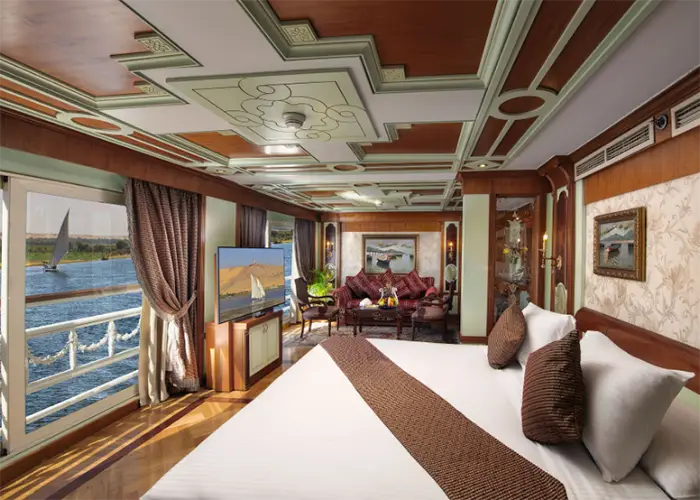
Here’s a rough picture of a day on the river.
You wake to the sound of water instead of traffic. Breakfast is on deck. Your guide meets you at the gangway at 7, and you reach the temple before the tour buses do. You walk through quiet halls while the air is still cool.
By 10:30, you’re back on board. The kids head for the pool, and you finally sit down with a coffee and watch the riverbank slide past. Farmers, water buffalo, palm trees, and children waving from the shore all drift by at a pace that makes everyone breathe a little slower.
Afternoon brings a second outing, or a lazy swim, or an hour in the cabin with books. Dinner is early enough that nobody is cranky. The evening ends on deck under a sky full of stars.
It’s a full day, and it’s an easy one.
Choosing the Right Itinerary
Not every Nile cruise suits young children. Shorter, well-paced itineraries tend to work better, because they keep the sightseeing rich without wearing everyone out.
If your family also wants the pyramids, the 4 Nights Nile Cruise from Cairo to Luxor adds Cairo and Giza to the mix. It’s a more complete introduction to Egypt, and it still keeps the “unpack once” benefit once you’re aboard.
Either way, you avoid the repeated hotel changes that exhaust families on land tours.
A Few Practical Notes
Time your trip. Egypt is most comfortable from October through April. Summer temperatures in Luxor and Aswan can be punishing for small children.
Prepare the kids. Ten minutes of reading about pharaohs and gods before you leave pays off enormously. If you want inspiration, a look at the places worth taking your kids before they grow up is a good place to start building the family’s travel mindset.
Listen to your children. Travelers under four feet tall often have the sharpest instincts. It’s worth reading what pint-sized travellers say about their own trips before you plan. Their priorities are usually simple: good food, somewhere to swim, and one thing that feels like a real adventure.
Plan one spectacle. If you’re staying in Cairo, consider something memorable after dark. Few experiences stay with a family like an opera performed against the backdrop of the Giza pyramids, when it’s available. Check what’s on during your dates.
Pack for the sun. Hats, light long sleeves, reef-safe sunscreen, and refillable water bottles. A small first-aid kit with the basics you’d normally use at home helps too.
The Bottom Line
Egypt will move your children. It will give them a sense of scale and age they can’t get from a textbook, and a memory they’ll still talk about at thirty.
The only question is how much of the trip they spend wishing they were somewhere else.
A land tour asks them to endure the logistics. A Nile cruise removes them. You get the temples, the stories, and the guide, and the rest of the time you get a pool, a shaded deck, and a river drifting by outside the window.
For families who want Egypt without the exhaustion, that’s an easy choice to make.