Set at the edge of Germany’s Black Forest, Baden-Baden has been attracting visitors to its thermal springs for nearly 2,000 years. Winter gives the historic spa town a particularly appealing atmosphere, bringing festive lights to the Kurhaus, steam to the outdoor thermal pools and a full calendar of concerts, exhibitions and seasonal events.
The Baden-Baden Christmas Market provides a strong reason to visit during the holidays, but the city remains rewarding throughout the colder months. Thermal baths, museums, classical performances, elegant architecture and easy access to the Black Forest make it well suited to a winter wellness break.
Visit the Baden-Baden Christmas Market
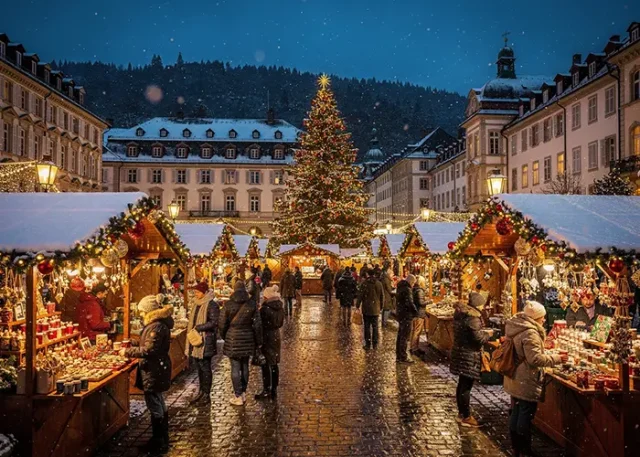
The Baden-Baden Christmas Market will take place from November 26, 2026, through January 6, 2027. Unlike many European Christmas markets that close before the end of December, Baden-Baden’s extended schedule allows travelers to visit during the period between Christmas and New Year’s Day.
The market fills the Kurgarten in front of the illuminated Kurhaus, creating an elegant backdrop for wooden stalls selling crafts, decorations, gifts and seasonal food. Visitors can warm up with mulled wine while sampling regional specialties, roasted nuts and sweet holiday treats.
The city center’s shops, restaurants and cafés are within walking distance, making it easy to combine the market with sightseeing or dinner. Weekends and public holidays are typically the busiest periods, so weekday visits can provide a more relaxed experience.
Warm Up in Baden-Baden’s Thermal Baths
Thermal bathing is the experience that defines Baden-Baden. Water from 12 natural springs emerges from deep below the city at temperatures reaching approximately 68°C. The bathing tradition helped earn Baden-Baden recognition as part of the UNESCO-listed Great Spa Towns of Europe.
Visitors can choose between two notably different thermal experiences.
Caracalla Spa is the more contemporary option, with indoor and outdoor thermal pools, waterfalls, whirlpools, steam rooms, relaxation spaces and an extensive sauna area. Winter is an especially atmospheric time to use its outdoor pools, where warm water and rising steam contrast with the cool Black Forest air.
Friedrichsbad offers a more traditional Roman-Irish bathing ritual inside an ornate building dating from 1877. Visitors move through a sequence of warm-air rooms, thermal baths and relaxation areas beneath decorative arches and a domed central pool.
Friedrichsbad has specific swimwear policies. Bathing is traditionally without swimwear on most days, while swimsuits are required on Wednesdays and Saturdays. Visitors should confirm the current schedule and rules before arriving. The experience is restricted to guests aged 14 and older, with those under 18 requiring adult accompaniment.
Allow at least several hours for either spa. Trying to squeeze a thermal visit between multiple attractions defeats much of its purpose.
Walk Through a UNESCO-Listed Spa Town
In 2021, Baden-Baden joined ten other European destinations on the UNESCO World Heritage List as part of the Great Spa Towns of Europe.
Its heritage can be explored on foot through a collection of self-guided World Heritage walks. Routes connect thermal baths, grand hotels, gardens, cultural institutions and villas that developed during the city’s rise as one of Europe’s most fashionable spa destinations.
The Kurhaus is the architectural centerpiece. Its colonnaded façade faces the Kurgarten, while the historic Trinkhalle stands nearby with a long arcade decorated with murals inspired by Black Forest legends.
Continue along Lichtentaler Allee, the park-lined promenade following the Oos River. The gardens are naturally quieter in winter, but the path remains one of the city’s loveliest places for a walk. Bare trees open views of historic villas and cultural buildings that can be partially obscured by foliage during summer.
Comfortable waterproof shoes are advisable, particularly when rain, frost or light snow makes the pathways slippery.
See an Exhibition at Museum Frieder Burda
Located beside Lichtentaler Allee, Museum Frieder Burda combines contemporary architecture with exhibitions devoted to modern and contemporary art.
From August 15, 2026, through January 10, 2027, the museum is presenting an exhibition of works by Simon Hantaï. The show brings together approximately 40 works spanning four decades of the Hungarian-born French artist’s experimentation with abstraction and color.
Beginning January 23, 2027, the museum will present two exhibitions: Europe in Pop Fever: From Erró to Sigmar Polke and Picasso to Baselitz, featuring figurative works from the Frieder Burda Collection.
The museum makes an excellent winter activity when the weather discourages a longer outdoor excursion. Its location also allows visitors to combine an exhibition with a walk along Lichtentaler Allee or a visit to nearby cafés and shops.
Attend a Performance at Festspielhaus Baden-Baden
The Festspielhaus Baden-Baden is one of Europe’s largest venues for opera and classical music. Its building incorporates the city’s former railway station, giving the performance hall an unusual combination of historic architecture and modern design.
The 2026–27 winter program includes the Winter Festival from December 11 through 20, followed by the Takeover Festival from January 29 through February 7. Concerts, opera, ballet and contemporary performances are scheduled throughout the season.
The Festspielhaus is close enough to the city center to combine a performance with dinner or drinks. Tickets for major productions should be booked in advance.
Experience the Kurhaus and Casino Baden-Baden
The Kurhaus has been a center of Baden-Baden’s social life for generations. Its ornate interiors, chandeliers and Belle Époque detailing continue to evoke the period when European aristocrats, writers and artists gathered in the city.
Casino Baden-Baden, located inside the Kurhaus, is worth seeing for its elaborate rooms even for visitors who are not serious gamblers. Classic table games and slot machines operate on different schedules, and guided visits may be available outside regular gaming periods.
Casino guests must be at least 21 years old and present an original passport or recognized identity document. Dress requirements apply to the traditional gaming rooms, so check the current policy before visiting.
Ride the Funicular to Merkur Mountain
On a clear winter day, the Merkur funicular carries visitors to the top of Baden-Baden’s local mountain. The Merkur Mountain Railway is one of Germany’s steepest funicular railways and provides access to panoramic views over Baden-Baden, the Rhine Valley and the northern Black Forest.
Walking trails extend from the summit, although winter conditions can vary considerably. Snow is possible but not guaranteed in Baden-Baden itself. Higher elevations in the Black Forest are more likely to experience wintry conditions.
Check the weather, trail conditions and funicular operating status before setting out. Warm layers and footwear with good traction are essential.
Take a Winter Excursion Into the Black Forest
Baden-Baden is a convenient starting point for exploring the northern Black Forest. Scenic roads lead toward forested hills, small communities and higher-elevation landscapes where snow is more likely.
Visitors can look for winter walking routes or travel farther into the region for cross-country skiing, sledding and other seasonal activities when conditions permit. Because snowfall varies from year to year, it is best to treat winter sports as a weather-dependent bonus rather than the foundation of the trip.
Travelers driving through the region should confirm road conditions and understand Germany’s winter tire requirements. Those who prefer not to drive can investigate guided excursions or regional public transportation.
Make Time for Baden and Black Forest Flavors
Winter suits the comforting food of southwestern Germany. Menus may feature game, slow-cooked meats, dumplings, roasted chestnuts, local cheeses and Black Forest ham. For dessert, seek out an authentic slice of Black Forest cake, traditionally made with chocolate sponge, cherries, cream and kirsch.
Baden-Baden is also close to the Rebland wine district. Although winter is quieter in the vineyards, local restaurants and wine bars continue to showcase Riesling, Pinot Noir and other wines produced in the surrounding hills.
Reserve dinner in advance during Christmas-market weekends and major Festspielhaus performances.
Where to Stay in Baden-Baden
Brenners Park-Hotel & Spa
Brenners Park-Hotel & Spa reopened following an extensive two-year renovation. Situated along Lichtentaler Allee, the grand hotel combines a historic setting with an expansive wellness program and convenient access to the city’s cultural attractions.
Aqua Aurelia Suitenhotel
Aqua Aurelia Suitenhotel is particularly well positioned for a thermal-bath vacation. The all-suite property is in the historic spa quarter, with an underground passage providing quick access to Caracalla Spa. Friedrichsbad and the old town are also within walking distance.
Roomers Baden-Baden
Roomers Baden-Baden offers a more contemporary design and social atmosphere. Its facilities include a spa, rooftop pool, bar and pan-Asian restaurant, while the Festspielhaus is directly across the street.
Planning a Winter Visit
Two or three nights provide enough time to experience the thermal baths, historic center, Christmas market and at least one cultural attraction. Travelers interested in a slower wellness trip or a Black Forest excursion could comfortably stay longer.
The nearest airport is Karlsruhe/Baden-Baden Airport, while larger international gateways include Frankfurt, Stuttgart and Strasbourg. Baden-Baden is connected to Germany’s railway network, although the main station is outside the historic center and requires a local bus or taxi connection.
Pack a warm waterproof coat, layers, gloves and footwear suitable for wet or icy streets. Winter weather can range from crisp sunshine to rain, fog and snow.
Baden-Baden does not depend on deep snow to create a memorable winter escape. Its appeal comes from the contrast between chilly walks and warm thermal water, festive evenings and quiet galleries, and grand European traditions framed by the forests and hills of southwestern Germany.