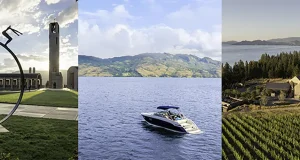
One of the biggest hurdles to a balanced travel lifestyle is the psychological dissonance of your environment. Most of the world’s beautiful destinations were designed for leisure. When you step into a beach town or a historic European city, the collective energy is one of relaxation and exploration. Your brain senses this. It sees the sunlight and hears the music and naturally wants to shut down the “work” centers of the prefrontal cortex.
This leads to the Digital Nomad Trap. You feel guilty when you are working because you feel you should be out exploring. Then, you feel guilty when you are exploring because you feel you should be working.

To break this cycle, you must shift your mindset from “traveler” to “resident.” This means accepting that you won’t see every landmark in the first forty-eight hours. By slowing down your pace, you give your brain permission to work without the fear of missing out.
The Science of the Routine Anchor
When your external world is shifting every few weeks, your brain loses its “environmental cues” for productivity. In a traditional office, the act of sitting at your specific desk tells your brain it is time to focus. On the move, you lose that trigger. This is where you must implement routine anchors. These are small, non-negotiable habits that stay the same regardless of whether you are in Tokyo or Tulum. It might be a specific type of tea you drink every morning, a five-minute stretching routine, or a specific playlist you only listen to while working.
For many people, understanding the psychological foundations of these habits is the first step toward stability. You might find yourself asking what is Liven and how can it help with this process. What is Liven? It is a resource designed to help you build these essential psychological foundations through science-based tools and habit tracking. By using such a platform, you can create a digital “home base” for your mental health. These anchors act as a signal to your nervous system that you are safe and in control, which drastically reduces the “decision fatigue” of navigating a new culture while trying to meet a deadline.
Mastering the Work Location Audit
A beautiful view does not always make a beautiful office. One of the most practical skills a traveler can develop is the ability to audit a workspace in minutes. We often focus on Wi-Fi speeds, but that is only the beginning. A truly balanced workflow requires a sensory audit.
First, consider ergonomics. Working from a soft couch or a low coffee table for a week will lead to physical pain that drains your mental energy. Second, evaluate the acoustic environment. A loud cafe might be fine for emails but it will be a nightmare for a deep-focus project or a client call. Finally, consider your social battery. Working in the middle of a high-tourist area means you are surrounded by people in “vacation mode.” Their high-energy distractions can be far more draining than the hum of a quiet library or a dedicated co-working space.
Time Zone Management and the Circadian Rhythm
Living on the move often means fighting against your own biology. Trying to take a midnight call with a team in New York while you are in Bali creates a state of “Time Zone Anxiety.” You feel constantly out of sync, as if you are living in the cracks between worlds. This creates chronic sleep deprivation which is the fastest way to kill your travel joy.
To manage this, you must be proactive with your boundaries. Negotiate “core hours” with your team or clients so you aren’t tethered to your phone at all hours. More importantly, use natural light to regulate your circadian rhythm. When you arrive in a new time zone, get twenty minutes of direct sunlight into your eyes as early as possible. This resets your internal clock and helps prevent the “travel fog” that makes work feel twice as hard as it actually is.
Social Loneliness and the Community Quotient
Perhaps the most hidden cost of a mobile lifestyle is transient loneliness. It is easy to meet people for a drink, but it is much harder to find people who understand your professional goals. Humans are social animals and our brains perform better when we feel part of a community.

To maintain your flow, you need to build a “Micro-Community” in every new location. This doesn’t mean finding a lifelong best friend; it means finding a regular “tribe.” It might be the baristas at the cafe you visit every morning, the regulars at a local gym, or a group of fellow freelancers at a co-working space. These small, repeated interactions provide the social safety net your brain needs to stay focused and motivated. Without them, the isolation of travel will eventually lead to professional burnout.
Integration and Sustainable Flow
The ultimate goal of a work-life-travel balance is integration. You aren’t trying to balance two competing lives; you are trying to create one cohesive experience. This is best achieved through the philosophy of “Slow Travel.” Instead of visiting ten cities in a month, stay in one city for three months.
Staying longer allows you to find your favorite grocery store, establish a gym routine, and actually finish your work projects without feeling rushed. It allows the “traveler” and the “worker” within you to stop fighting and start supporting each other. When you move slowly, your work provides the structure that makes the travel meaningful, and your travel provides the inspiration that makes the work better. Balance is not about how far you go, but about how well you live while you are there.