Many skiing and snowboarding injuries happen late in the day, on one more run when your legs are tired and visibility is starting to fade. Even so, most of them are sprains and strains that heal with rest, and many people finish a ski trip with no injury at all.
The question most people ask before booking is which sport is safer. Neither is clearly riskier overall, so the more useful question is which part of your body is most at risk in your sport. If you still have a painful knee or wrist once you are home, consulting a sports injury clinic can tell you whether it needs treatment, though most people will not need one.
In this article, we will cover which sport is more dangerous, common ski injuries, common snowboarding injuries, how to avoid them and whether you can ski with a knee injury.
Is Skiing or Snowboarding More Dangerous?
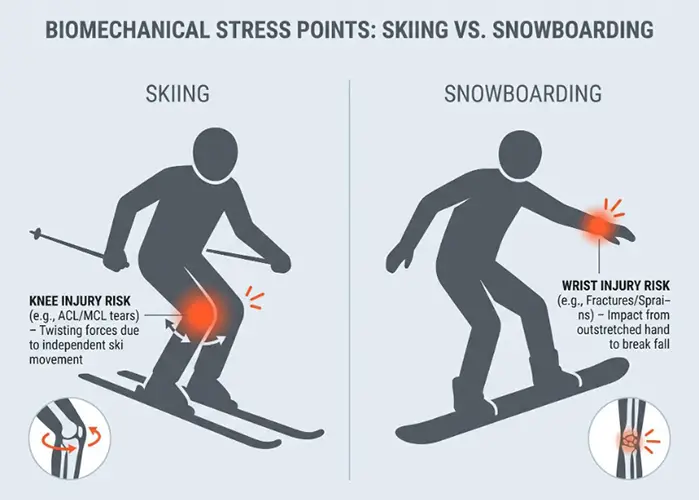
Neither skiing nor snowboarding is clearly more dangerous overall, but skiers and snowboarders tend to injure different parts of the body. The difference shows most clearly in the knee and wrist.
According to the American Academy of Orthopedic Surgeons (AAOS), knee injuries are very common in skiing, especially tears of the anterior cruciate ligament (ACL). In snowboarding, the wrist is the part of the body injured most often.
The main reason is how the bindings hold your feet. Each ski moves on its own, so a skier who falls and twists usually puts the force through the knee. By contrast, a snowboarder has both feet strapped to one board, so the knees twist less, and riders tend to put their hands out to stop a fall.
Common Ski Injuries
Common ski injuries affect the knee, thumb, shoulder and lower leg, and the knee is injured most often:
- Knee ligament tears – most ski knee injuries affect the ACL or the medial collateral ligament (MCL), usually when a ski keeps moving one way while your body turns another. An ACL tear often causes a popping noise, a knee that gives way and swelling within a day. An MCL sprain tends to cause pain along the inner side of the knee.
- Skier’s thumb – falling onto an outstretched hand while holding a pole can injure a ligament in the thumb, which usually causes pain at its base and a weak grip for weeks.
- Shoulder injuries – putting an arm out to break a fall can dislocate or sprain the shoulder, and the AAOS also lists fractures around the shoulder among common ski injuries.
- Lower leg fractures – the AAOS lists fractures of the lower leg among common ski injuries, so a fall that leaves you unable to put weight on your leg should be checked straight away.
Common Snowboarding Injuries
Common snowboarding injuries follow a different pattern, affecting the wrist, shoulder, tailbone and ankle, with the wrist hurt most often:
- Wrist injuries – riders usually put their hands out when they fall, so the wrist bends backward and can be sprained or broken.
- Shoulder injuries – falls onto the shoulder are common while riders are learning, which is one reason a first lesson covers how to fall safely.
- Tailbone bruises – beginners often fall backward when the edge of the board digs into the snow, landing on the tailbone, which bruises easily and can stay sore for weeks.
- Snowboarder’s ankle – hard landings can fracture a small bone on the outside of the ankle, an injury common enough in snowboarders to be named after them.
How to Avoid Injuries While Skiing
Avoiding injuries while skiing mostly depends on preparation, equipment and knowing when to stop. These steps can make the biggest difference:
- Take lessons – learning to fall and to turn under control can lower the risk, and the AAOS recommends lessons for both sports.
- Check your bindings – ask a ski shop that follows recognized testing standards to set, adjust and test your boots and bindings, so they release when they should.
- Build leg strength – exercise your legs and core in the weeks before the season, since tired muscles give the knee less support.
- Stop early – many ski injuries happen at the end of the day, when people are tired, so finish while your legs still feel strong and save the steeper runs for the morning.
- Wear protective gear – choose a ski helmet, not a bike helmet. If you snowboard, wrist guards may also help prevent serious wrist injuries, especially in your first season.
Can You Ski With a Knee Injury?
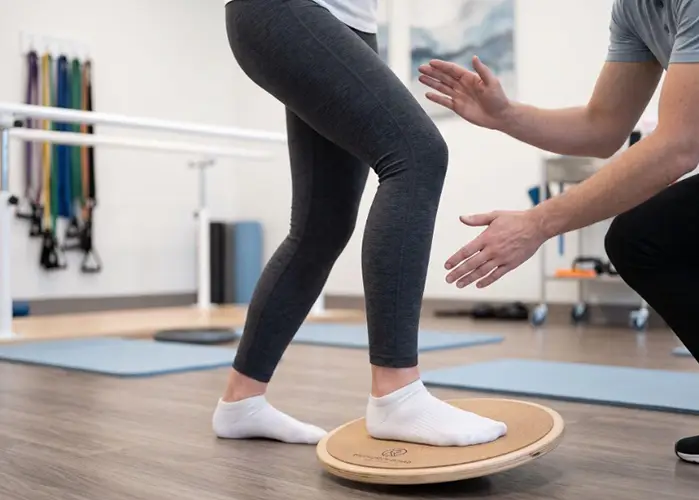
Skiing with a knee injury is generally not advised until the knee has healed and your doctor or physiotherapist has confirmed it is ready. A knee that still swells, gives way or hurts on stairs is not ready for a slope, because a twisting fall can cause further damage to the joint. After a ligament injury, many people need several months of rehabilitation before they can ski safely again, so check with your doctor how long your own recovery is likely to take before you book.
If you have had an ACL injury or an ACL reconstruction, or you still have knee pain, have the knee assessed before the trip. An assessment can show whether the strength and stability around the joint are enough for skiing, and which exercises to do in the weeks beforehand. A knee brace does not replace those exercises, so wear one only if your doctor or physiotherapist recommends it.
If you hurt a knee, wrist or shoulder during the trip, stop skiing for the day. A joint that cannot bear your weight, looks out of shape or swells quickly should be checked by a doctor straight away, since these can be signs of a fracture or dislocation. For milder pain, rest, ice and a supportive wrap can help in the first few days, but have any injury medically assessed before you ski again.
One Last Thing: A Season You Can Finish
Whichever sport you choose, knowing its common injuries tells you what to protect. For skiers that is mainly the knee, and for snowboarders the wrist. If you do get hurt, stop for the day. Have any lasting pain checked before your next trip, because skiing on a joint that has not healed can make it worse.
Small habits can prevent many ski and snowboarding injuries: a lesson at the start, bindings checked by a shop, legs strengthened before the season, stopping while your legs still feel strong, and the right protective gear. With them, most people finish the season with nothing worse than tired legs, and look forward to the next one.